Published in : Orthopedics | February 25, 2026 |
 Medically Reviewed
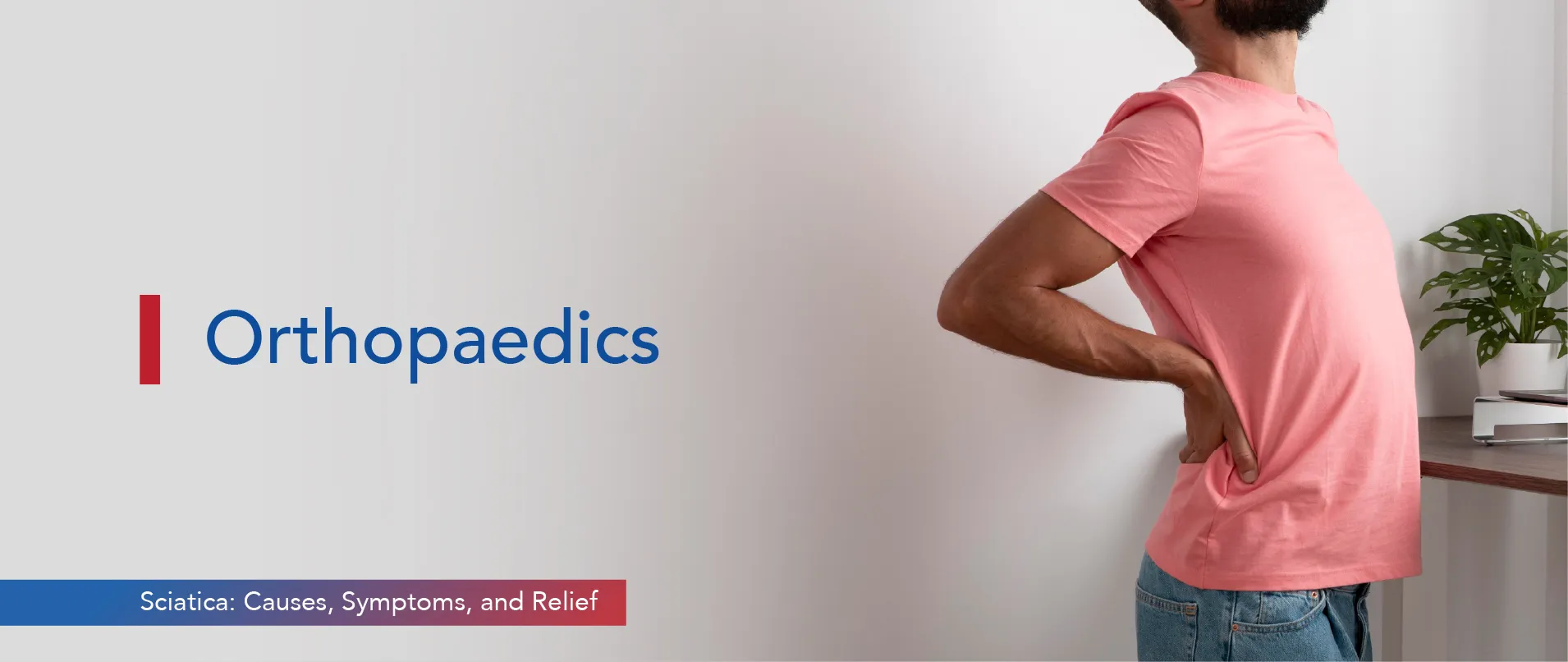
Have you ever had this experience when you feel a sharp pain running down your back into your leg, and you are convinced it’s just muscle strain? What most people dismiss as normal back pain is usually associated with sciatica, which is an ailment occasioned by the poking or pressing down of the sciatic nerve, which is the longest nerve in the human body.
Sciatica may cause mild tingling to severe radiating pain, resulting in difficulty with movement, sleep, and quality of life. It can be treated more effectively in the early stages, thereby relieving pain and avoiding long-term complications.
Sciatica refers to pain, tingling, or numbness that follows the path of the sciatic nerve, usually starting in the lower back and travelling down the leg. This nerve is the largest in the human body and is formed by spinal nerve roots L4 to S3. It extends from the lower spine, through the buttocks, down the back of the thigh and into the lower leg. Sciatica is caused when this nerve, or any of the root origins of this nerve, becomes compressed or inflamed.
The sciatic nerve performs both sensory and motor functions. It ensures adequate movement of the muscles in the back of the thigh, as well as in parts of the lower leg and foot. It also delivers sensation to the posterior leg and sole of the foot. When compressed or irritated, the nerve may trigger pain, tingling, weakness, or numbness along its entire course.
The sciatic nerve controls the hamstrings and several muscles in the foot and lower leg. It also carries signals that influence sensation in the calf and sole of the foot. Because of its role, any disturbance in the nerve may result in a combination of pain, weakness, or altered sensation in the affected leg.
Several conditions may lead to the irritation or compression of the sciatic nerve. Identifying the exact cause helps guide the appropriate course of action.
When a disc between the spinal bones bulges or ruptures, it may press against a nerve root. This is one of the most frequent causes in adults under 50 and may result in sudden or gradual symptoms.
In older individuals, spinal stenosis may contribute to nerve compression. As the passageways through which nerves exit the spine narrow, symptoms may worsen with walking and improve with rest.
Known as spondylolisthesis, this condition occurs when one vertebra moves forward over another. The resulting pressure may disturb the nearby nerve root.
With time, spinal discs may lose their structural strength. Reduced disc height may create friction or pressure on the nerves, leading to intermittent or persistent symptoms.
Spasm or inflammation of deep pelvic muscles may pinch the sciatic nerve. One recognised condition, piriformis syndrome, is caused by irritation of the nerve where it runs near the piriformis muscle. This is more common in athletes and those with repetitive lower-body strain.
Tumours, cysts, or infections near the spine may also affect the nerve. These are less common but require careful investigation, especially in cases with red-flag symptoms or a poor response to treatment.
Sciatica symptoms may develop gradually or appear suddenly. Although presentations may differ, several features are commonly reported.
The pain often begins in the lower back or buttocks and travels down the back of the thigh. It may reach the calf, foot, or toes. In most cases, only one leg is affected.
People may experience a burning sensation or pins and needles in the leg. These symptoms are usually related to nerve irritation and may change with posture or movement.
Some individuals notice weakness when lifting the foot or extending the leg. The affected limb may feel heavy or clumsy, especially when walking or climbing stairs.
Parts of the leg or foot may lose sensation. This may occur on its own or alongside pain and weakness.
Recognising these features early supports timely intervention. If pain progresses or causes mobility issues, a referral to a sciatica specialist may be appropriate.
The majority of people improve within a few weeks with non-surgical treatment. The focus is still on pain relief, functional recovery and prevention of recurrence.
Avoiding prolonged sitting or standing, using proper body mechanics, and engaging in regular light movement may help reduce symptoms. Walking or soft stretching often helps with circulation and spinal health.
Supervised rehabilitation may help restore strength and balance. Exercises tend to focus on core muscles, hamstring flexibility, and spinal posture. A therapist may also provide education on lifting techniques and injury prevention.
If the discomfort is impacting daily life, oral medication or specific interventions may provide relief. Heat or cold packs may also help to soothe muscle tension in the early phase.
In cases in which pain continues despite therapy, or in cases with significant weakness or bladder involvement, sciatica surgery may be considered. Procedures vary depending on the cause but often focus on relieving pressure on the nerve.
For complex cases, consultation at the best orthopaedic hospital in Bangalore may be more comprehensive.
Sciatica is a symptom of an underlying disturbance of the nerves in the lower back. It may cause pain, weakness, or numbness along the course of the sciatic nerve. While many people recover with conservative care, some need specialist intervention.
By learning about the cause and recognising the signs, people may seek care early and prevent worsening of symptoms. Effective sciatica treatments include a combination of posture awareness, guided rehabilitation and, if necessary, surgical intervention. A long-term plan of physical activity and lifestyle changes may aid recovery and decrease the likelihood of recurrence.
Most people describe a sharp or burning pain in one buttock or leg. Some may feel tingling, numbness, or heaviness. Pain that worsens while sitting or bending forward may be an early sign of sciatica.
Gentle walking, stretching the back or hamstrings and using cold or warm packs may offer some relief. Avoiding prolonged sitting and maintaining an upright posture may also provide relief in the early stages.
In many cases, sciatica improves significantly with proper treatment and may not return. However, recurrence is possible, especially if underlying spinal problems persist. Treating the underlying cause and following a structured rehabilitation plan may offer long-term relief. When structural issues are addressed and the spine is supported, the chance of recurrence may be reduced.
Yes. Regular physical activity, core strengthening, and attention to posture play a major role. Avoiding heavy lifting and maintaining a healthy weight also lowers the risk of sciatic nerve irritation.
3 Mins Read
Categories: Orthopedics










Sciatica Causes, Symptoms, and Relief is available for appointments. Please fill the below form to book an appointment.
Unlock the door to exceptional healthcare, book an appointment with SPARSH Hospital and let your journey to wellness begin.
Copyright © 2026 SPARSH Hospital, A Unit of Shiva & Shiva Orthopaedic Hospital Pvt Ltd.