Published in : Gastroenterology | February 12, 2026 |
 Medically Reviewed
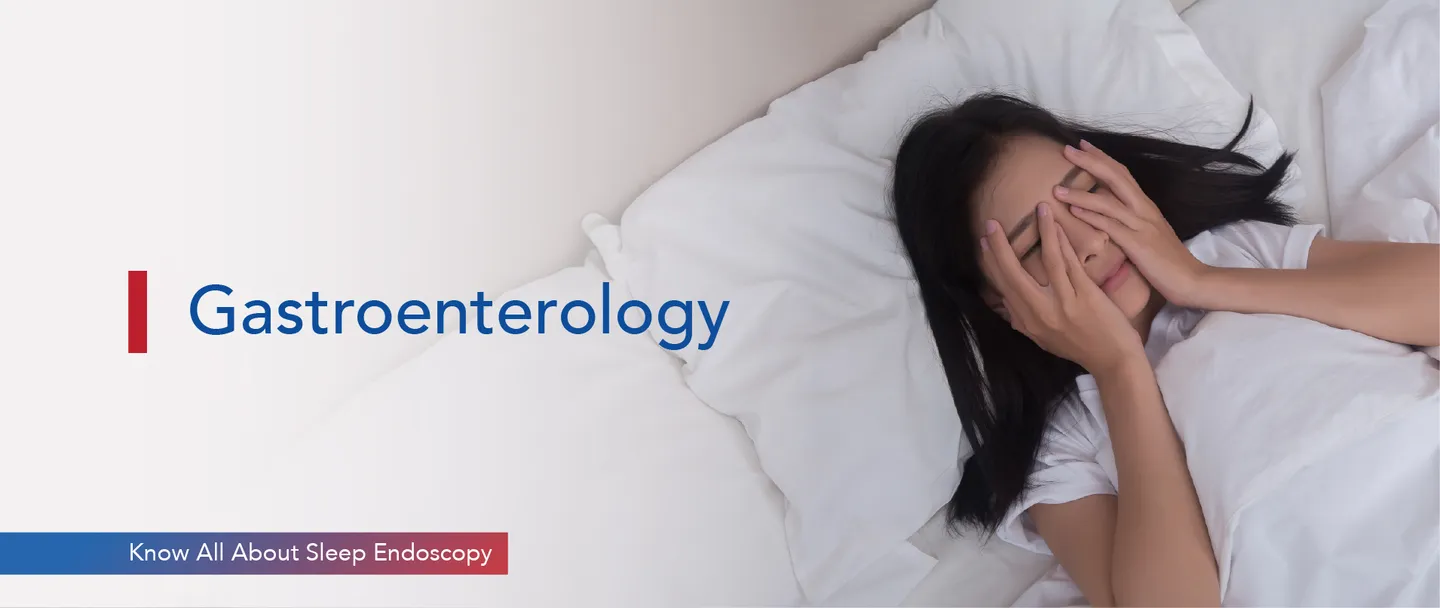
When breathing becomes difficult during sleep, standard tests may not always explain why. That is where a specialised test called sleep endoscopy becomes important. Many people ask, what is endoscopy, or how is endoscopy done, but not everyone knows that some forms of endoscopy are designed specifically for evaluating breathing problems that happen while asleep.
Join us as we explain how sleep endoscopy works, how it helps identify the causes of sleep-related airway collapse, and how it compares to more familiar types of endoscopic procedures. This content is useful for anyone seeking clarity on advanced sleep testing or planning a discussion with a gastroenterologist in Bangalore or an ENT specialist.
Sleep endoscopy is not like routine endoscopy tests used to examine the digestive tract. It is a unique procedure that helps doctors observe how the upper airway behaves during sleep-like conditions.
While most standard sleep studies measure breathing and oxygen levels through sensors, they do not show what is physically happening inside the throat. That is what makes sleep endoscopy different. It allows the medical team to directly see where the airway narrows or collapses while the person is under light sedation.
The most common reason for performing sleep endoscopy is when a patient has obstructive sleep apnoea or severe snoring, and doctors need to know exactly which part of the throat is causing the blockage.
Since this test gives a real-time view of the relaxed airway, it offers a more accurate picture than what can be seen when the person is awake. If you have ever wondered what diseases can be detected by an endoscopy, sleep endoscopy offers answers related to upper airway problems linked with sleep apnoea and snoring.
This procedure is sometimes referred to as drug-induced sleep endoscopy, because a sedative is used to put the patient in a sleep-like state. It is considered safe when performed in a monitored environment such as a gastroenterology hospital in Bangalore or a multi-speciality diagnostic centre.
Sleep endoscopy follows a clear and structured process. The goal is to observe dynamic airway changes under controlled sedation, without putting the patient at risk. This is not the same as a diagnostic procedure for the stomach or intestines, but it still follows many of the same safety principles. For those who ask is endoscopy painful, the answer in this case is no, because sedation is used and the scope is very thin.
Before the test begins, the medical team connects the patient to vital monitoring tools. These include oxygen level sensors, heart rate monitors and respiratory support systems if needed. The patient lies comfortably on their back, and a mild sedative is given through a drip.
Once the patient enters a sleep-like state, a thin, flexible tube with a camera is inserted through the nose. The camera moves gently down into the throat. There is no pain due to the sedation, and the scope used is much smaller than the ones used for digestive procedures.
As the airway muscles relax, the doctor observes how different parts of the throat behave. These include the soft palate, base of the tongue, epiglottis and side walls of the throat. Video is recorded throughout the test for further review and treatment planning.
The entire procedure usually lasts 20-30 minutes. After the recording is complete, the sedative wears off and the patient is monitored until they are fully alert. For those asking what is an endoscopy test in the context of sleep issues, this is one of the most advanced and accurate options available.
The test does not replace traditional sleep studies but complements them by offering detailed structural insight. People who have failed CPAP therapy or need surgery often undergo sleep endoscopy to identify the exact site of airway collapse.
Like all medical procedures, sleep endoscopy has areas that require careful attention. These are not risks in the usual sense, but technical details that affect how accurate and useful the results will be. For those asking is endoscopy dangerous, the answer is no when it is done under professional supervision, but a few points are worth keeping in mind.
Too little sedation may prevent full airway collapse, while too much may cause excessive muscle relaxation that does not reflect natural sleep. The doctor carefully adjusts the dose to achieve a sleep state that mimics how the airway behaves during real rest.
The throat naturally produces saliva and mucous. During the test, these secretions may block the view or blur the image. Doctors use suction techniques to keep the pathway clear for better visibility.
Some people experience airway blockage only in certain sleep positions. The medical team may change the position of the head or body slightly to see how the airway responds, especially if positional sleep apnoea is suspected.
Since the test captures only a small portion of a typical night’s sleep, it may not reflect changes that occur in deeper stages such as REM sleep. Still, it provides essential insights into structural issues that cannot be seen during daytime exams.
The results from sleep endoscopy help determine whether surgery, oral appliances or positional therapy will be most effective. If you are already being treated at a gastroenterology hospital in Bangalore, or planning a visit to a sleep specialist, this test may be discussed as part of your ongoing care.
Sleep endoscopy is a powerful diagnostic tool that shows what happens inside your throat when you sleep. If you are exploring your options with a gastroenterologist in Bangalore or a sleep specialist, understanding how this test works can help you make informed choices about your treatment plan.
By directly visualising the airway in a sleep-like state, doctors can accurately identify the level and pattern of airway collapse. This helps avoid guesswork and ensures that treatments such as CPAP adjustments, oral appliances or surgery are based on clear structural findings.
For individuals who continue to experience symptoms despite standard therapy, sleep endoscopy offers clarity and direction. With proper evaluation and expert supervision, it becomes an important step toward improving sleep quality, breathing comfort and overall well-being.
The procedure involves giving the patient a sedative to create a sleep-like state. A thin endoscope is passed through the nose to observe how the throat and airway collapse during sleep. The test is safe and takes place under close monitoring.
The active recording portion usually takes around 15 to 30 minutes. Including preparation and recovery time, the full visit may last up to one or two hours depending on the response to sedation.
Most patients recover without problems. Mild side effects may include temporary throat dryness or grogginess from the sedative. Serious complications are rare when the procedure is performed by trained professionals.
Diagnosis usually begins with a sleep study using sensors that track breathing, oxygen and brain activity. If results show moderate or severe sleep apnoea, further tests like sleep endoscopy may be done to examine airway structure.
The primary cause is the collapse of soft tissue in the throat during sleep. This blocks airflow and causes pauses in breathing. Structural issues, muscle tone and body position all influence this condition and vary from person to person.
3 Mins Read
Categories: Gastroenterology















Know All About Sleep Endoscopy is available for appointments. Please fill the below form to book an appointment.
Unlock the door to exceptional healthcare, book an appointment with SPARSH Hospital and let your journey to wellness begin.
Copyright © 2026 SPARSH Hospital, A Unit of Shiva & Shiva Orthopaedic Hospital Pvt Ltd.