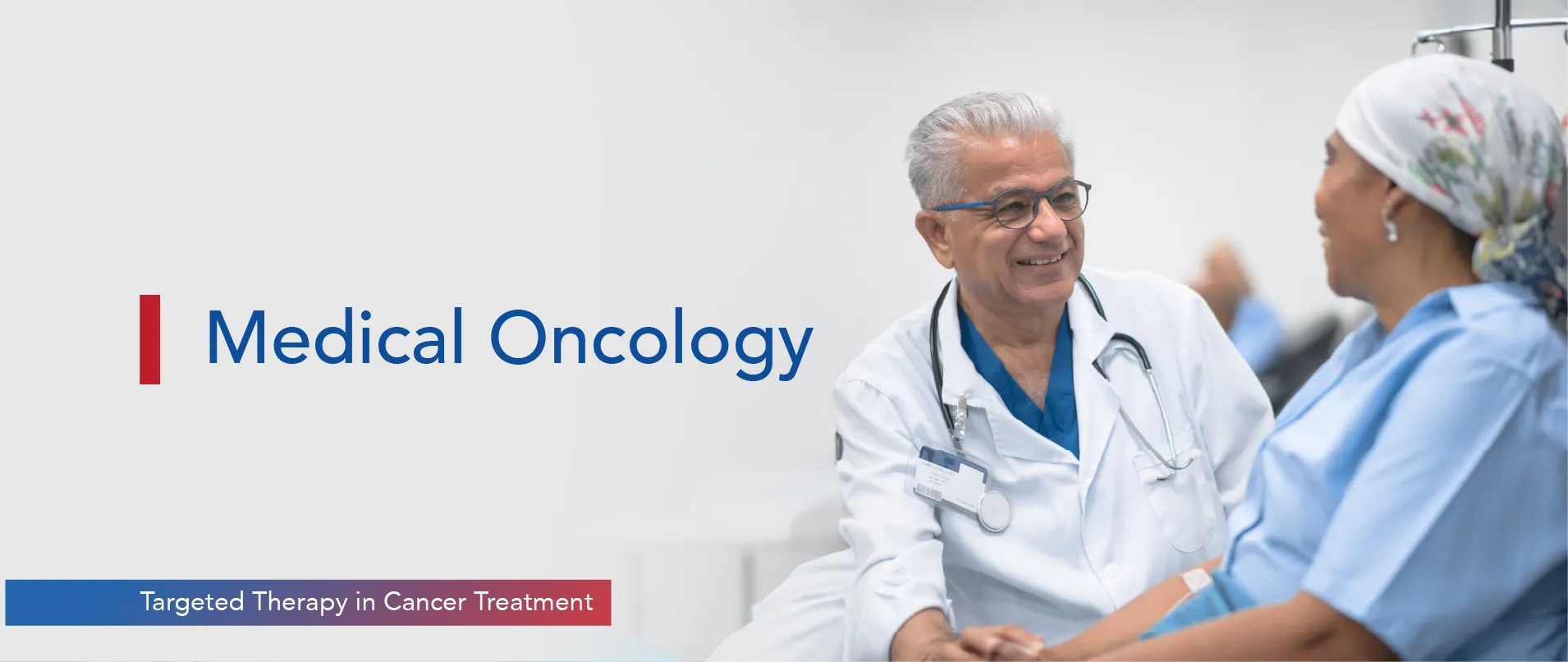
Over the years, cancer treatment has moved beyond a one-size-fits-all approach. Today, doctors can often tailor therapy based on the unique features of each patient’s tumour. This shift has led to the development of targeted therapy, which focuses on specific biological changes in cancer cells rather than affecting the entire body. By working with the patient’s own tumour profile, this approach aims to improve treatment effectiveness while reducing unnecessary side effects. It now plays a key role in modern oncology care.t.
This approach allows doctors to plan treatments that work with the patient’s biology. While targeted therapy does not replace all other forms of treatment, it has become an integral segment of modern oncology.
Targeted therapy is a form of cancer treatment that focuses on specific molecules that help cancer cells grow, divide, and spread. These molecules are often proteins or gene mutations present in tumour cells. Unlike chemotherapy, which acts broadly on all rapidly dividing cells, targeted therapy only affects defined cellular targets.
To understand targeted therapy, it helps to know what it is designed to do. The therapy aims to block the specific pathways that cancer cells rely on. These targets may be proteins on the surface of cancer cells or inside the cells that control growth signals. Such interventions may help control tumour growth without causing as much damage to healthy tissues.
Targeted therapy for cancer is based on the principle of tumour specificity. Each cancer type may have a distinct genetic or protein profile. Doctors use laboratory tests to identify these characteristics. This process, known as biomarker testing, helps determine whether a patient is eligible for targeted treatment.
Doctors use specialised lab tests, called biomarker tests, to check whether targeted therapy is suitable. These results help guide treatment choices and avoid unnecessary medications. In centres such as a medical oncology hospital in Bangalore, access to advanced testing supports tailored treatment planning. The strategy also considers the nature of resistance. Over time, tumours may stop responding to treatment. Therefore, ongoing monitoring remains essential.
Targeted therapy is not universal. It only works when the tumour carries the target it is designed to affect. For example, not all breast or lung cancers respond the same way. The decision to proceed with targeted treatment depends on specific molecular findings rather than tumour location alone.
Understanding the types of targeted therapy is essential for patients and healthcare professionals involved in treatment decisions. The main categories are monoclonal antibodies and small-molecule inhibitors. Each functions differently depending on its design and the location of the target.
These are laboratory-produced proteins designed to attach to specific markers on cancer cells. They work by blocking signals that support tumour growth or by tagging cells for immune system recognition. Some monoclonal antibodies may also carry substances that help deliver treatments directly into cancer cells. Because they work outside the cell, they are usually given through intravenous infusion in a hospital or clinic setting.
These are chemical agents that can enter cells and interfere with internal components. Most act by inhibiting enzymes responsible for cell division or survival. Because they are small, they are usually administered in oral form. They are often used in cancers where genetic changes affect the signals that tell cells when to grow.
Different medical oncology settings, including a cancer hospital in Bangalore, may offer both types depending on patient needs and diagnostic findings. A combination of therapies may also be used when appropriate. The decision requires careful planning and detailed knowledge of tumour biology.
To understand how targeted therapy works, it is important to look at cancer biology. Cancer cells grow and survive using biological pathways that work differently from normal cells. Targeted therapy disrupts these processes in specific ways.
Cancer cells often send signals to themselves or surrounding cells to promote unchecked growth. Some targeted therapies interfere with these signals, reducing the ability of tumours to expand.
Tumours need blood supply to grow. Certain therapies (a process called angiogenesis) block the development of new blood vessels. When this pathway is interrupted, cancer cells may receive less oxygen and nutrients.
Some targeted treatments make cancer cells more visible to the immune system. They may enhance immune response by flagging abnormal cells for destruction. This mechanism is useful when immune cells alone cannot detect tumour cells efficiently.
In some cases, therapies deliver toxins or radioactive substances into tumour cells. These drugs use a targeting molecule as a guide, releasing their payload only after binding with the cancer cell.
Some therapies work by interfering with proteins inside the cancer cell. These proteins may control cell division or DNA repair. By blocking them, therapy limits the cell’s ability to multiply or survive.
When managed by a trained medical oncologist in Bangalore or elsewhere, these approaches may be personalized to achieve better outcomes. The exact mechanism used depends on tumour type, molecular target, and treatment goals.
Although targeted therapy often causes fewer side effects than chemotherapy, some reactions can still occur and vary from person to person. The impact varies depending on the drug type, dose, and individual response.
Many targeted therapies affect the skin, leading to dryness, rashes, or changes in pigmentation. Hair texture and colour may also change. These effects can be distressing but are usually manageable with supportive care.
Some patients experience diarrhoea or mouth sores. These may occur early or develop over time. Close monitoring helps prevent complications.
Therapies affecting blood vessel formation may lead to high blood pressure or delayed wound healing. In rare cases, there may be concerns related to bleeding or clot formation.
Liver enzymes may rise during treatment, signalling inflammation. Regular blood tests are often done to monitor liver health and adjust medication if needed.
Certain treatments affect heart function. This may include changes in heartbeat or reduced pumping capacity. Cardiologists may be involved in monitoring if risk is identified.
Each patient requires individual and personalised assessment. Medical teams at a cancer hospital in Bangalore may offer a multidisciplinary approach involving oncologists, dermatologists, and other specialists to manage side effects effectively.
Targeted therapy has become an important part of modern cancer care, offering more personalised treatment options for many patients. It targets specific features of tumour cells, helping treatments work more precisely and, in many cases, with fewer side effects. Understanding targeted therapy in cancer helps patients and caregivers engage in informed discussions.
The strategy relies on accurate diagnosis, molecular testing, and continuous evaluation. It is not a replacement for other treatments, but when used correctly, it adds value to the overall plan. Access to experienced professionals, such as a medical oncologist in Bangalore, ensures that this approach is used safely and effectively.
With research ongoing and new targets being discovered, the field of targeted therapy continues to grow. For people exploring what is targeted therapy in cancer treatment, the focus remains on offering personalised care, improving quality of life, and managing disease with greater accuracy.
Treatment may involve tablets taken at home or medicines given through a drip at the hospital, depending on the drug. Monitoring will include scans and blood tests to assess response and manage side effects.
The method depends on the drug. Small-molecule inhibitors are often taken as tablets. Monoclonal antibodies are usually given through infusions in a clinical setting.
Some people may experience skin issues, fatigue, or digestive changes. Side effects vary. Doctors monitor patients closely and offer support throughout treatment.
Targeted therapy is used when tests show that a tumour has specific features the medicine can target. Since not all cancers have these markers, this treatment is not suitable for everyone.
3 Mins Read
Categories: Oncology



Targeted Therapy in Cancer Treatment is available for appointments. Please fill the below form to book an appointment.
Unlock the door to exceptional healthcare, book an appointment with SPARSH Hospital and let your journey to wellness begin.
Copyright © 2026 SPARSH Hospital, A Unit of Shiva & Shiva Orthopaedic Hospital Pvt Ltd.









 Medically Reviewed