Published in : Cardiac Sciences | February 12, 2026 |
 Medically Reviewed
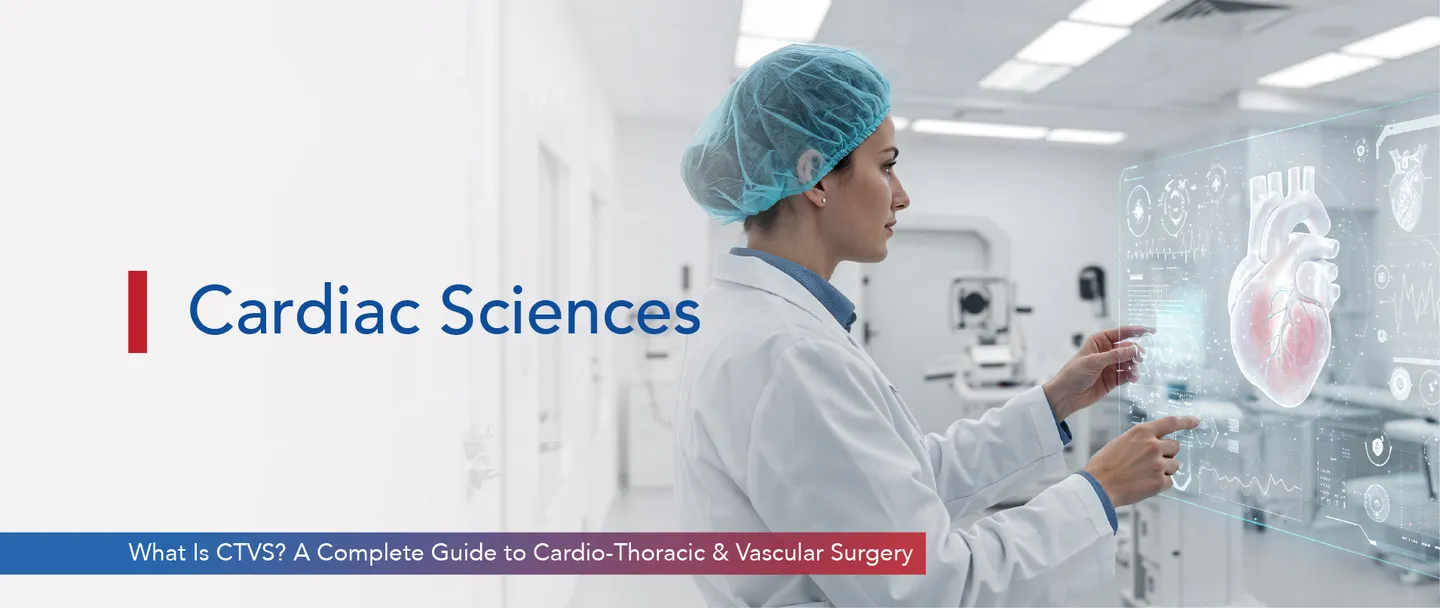
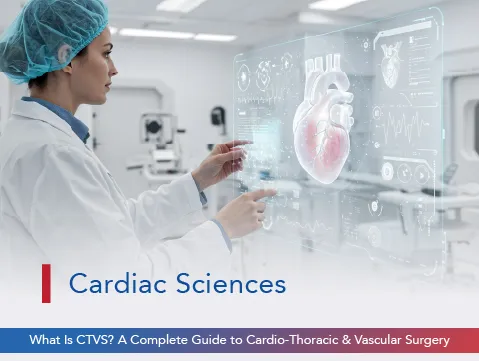
When routine treatments no longer support the heart, lungs or blood vessels, doctors may explore specialised options. This is where CTVS becomes relevant (standing for Cardiothoracic and Vascular Surgery). It is a surgical discipline that handles complex conditions involving the chest and major blood vessels.
Many people hear this term but are unsure what it actually means. If you are preparing for such a surgery or helping someone who is, knowing what to expect can make a big difference. This blog will guide you through what is CTVS, why it is performed, what the procedures involve and how recovery works.
Cardiothoracic and vascular surgery is a field of medicine that focuses on surgical treatment involving three areas. These include the heart, the lungs along with the organs in the chest cavity, and the major arteries and veins in the body. Each type of surgery requires exact skill and careful planning, as these organs control critical functions of the body.
CTVS treatment is usually done in highly advanced medical centres. The approach may include traditional open surgeries or more modern, minimally invasive methods depending on the condition. Conventionally, CTVS procedures are carried out by the best cardiologists in Bangalore and care teams (trained to handle delicate operations).
CTVS surgery is not suggested as a first line of treatment. It is recommended when other medical approaches such as medication or minor interventions are no longer effective. These surgeries are performed to manage or correct life-altering conditions that affect the heart, lungs or blood vessels. Here are some of the major reasons why CTVS treatment may be necessary:
When the arteries that carry blood to the heart become narrow or blocked, the flow of oxygen-rich blood may reduce significantly. This reduction may lead to symptoms such as chest discomfort, breathing difficulty or strain on the heart muscle. In such situations, doctors may plan a bypass surgery to create a new pathway that allows blood to reach the heart more effectively.
The valves inside the heart control how blood moves from one chamber to another during each heartbeat. In certain individuals, these valves may not open fully or close properly over time. This may place extra pressure on the heart and affect its ability to pump efficiently. Surgical repair or replacement may be advised to support long-term heart function.
Blood vessels that become weak, swollen or narrowed may disrupt normal circulation in different parts of the body. Conditions such as aneurysms or arterial narrowing may increase health risks if left untreated. Through CTVS procedures, surgeons may strengthen damaged vessels or remove affected sections to help restore smoother blood flow.
CTVS also includes surgery on the lungs and chest organs. These are done when someone has a tumour, trauma or infections that cannot be managed with medication alone. Each surgery is planned after complete evaluation. Surgeons work closely with cardiologists in Bangalore to assess test results and determine the best path forward.
Cardiac surgery is not a single approach. Different types of CTVS procedures are used depending on the disease and the part of the body involved. The techniques may vary from open surgeries to less invasive ones using special tools.
This is a common method where the chest is opened to allow the surgeon direct access to the heart. It is used to perform bypass grafts, valve replacements and repairs in serious heart conditions.
In this method, the surgeon uses small incisions and cameras to operate with accuracy. This method may cause less pain and offer faster healing. It is not suitable for all patients and depends on the complexity of the case.
Some people may have leaky or narrowed heart valves. These valves may be repaired or replaced with either synthetic or tissue options. The choice depends on age, lifestyle and long-term health plans.
This is performed when arteries in the neck, legs or abdomen are blocked. A graft is used to create a new route for blood to flow freely. These procedures may help reduce the chance of stroke or leg ulcers.
All these surgeries fall under the care offered at a cardiology hospital in Bangalore, where CTVS services are part of a broader cardiac care programme.
The entire process around a CTVS procedure follows a defined journey. It starts from diagnosis and continues well into post-operative care. Patients are not only operated on, but also monitored and supported throughout.
Surgical planning always begins with a complete medical review. Doctors may perform ECG, blood tests and advanced imaging to evaluate the condition’s severity. Each case is reviewed carefully [through discussions involving surgeons, cardiologists and support teams] to choose the most appropriate treatment.
The patient receives general anaesthesia for complete comfort [once the surgical plan is confirmed]. Throughout the operation, vital signs such as oxygen levels, blood pressure and heart rhythm are closely monitored. The procedure may extend for several hours under expert supervision, depending on the surgical complexity.
Post-surgery, the patient is shifted to the intensive care unit for round-the-clock monitoring. The doctors then observe healing patterns, heart performance and breathing stability.
Once stable, the patient is shifted to a regular recovery ward. This includes walking assistance, breathing exercises and diet planning. Doctors review the condition regularly before discharge.
After discharge, the person may need weeks to months to return to regular activities. Recovery also includes lifestyle adjustments, follow-up visits and emotional support. Rehabilitation support is often given to improve strength and heart function.
Many patients at a cardiology hospital in Bangalore are guided by a structured plan that makes recovery safer and smoother.
CTVS is a key part of treating serious heart and vascular conditions when other treatment plans are no longer enough. These surgeries may sound complex, but they often help patients live longer and better. Each procedure is designed with safety and precision in mind [be it clearing blocked arteries or repairing heart valves]. With careful planning and expert guidance, patients who undergo CTVS procedures often experience improved health and renewed confidence in daily life.
It is a surgery done to treat problems related to the heart, lungs or major blood vessels. Common examples include bypass surgery, valve repair, lung tumour removal or vascular graft procedures.
Most people need between 6-12 weeks to recover fully. The recovery timely depends on the type of surgery, the person’s age, physical health and how well the recovery plan is followed.
There may be chances of infection, bleeding, blood clots or irregular heartbeat. In rare cases, patients may react to anaesthesia. Hospitals take care to lower these risks and monitor the patient closely.
It depends on the surgery and the patient’s medical condition. Some may need it for a few months. Others may continue longer if there is a high risk of clotting. Doctors provide a specific plan.
Yes, selected patients may benefit from newer approaches that use catheters through smaller openings. These are less invasive and may offer faster recovery in suitable cases.
3 Mins Read
Categories: Cardiac Sciences







What Is CTVS? A Complete Guide to Cardio-Thoracic and Vascular Surgery is available for appointments. Please fill the below form to book an appointment.
Unlock the door to exceptional healthcare, book an appointment with SPARSH Hospital and let your journey to wellness begin.
Copyright © 2026 SPARSH Hospital, A Unit of Shiva & Shiva Orthopaedic Hospital Pvt Ltd.