Published in : Pulmonology | April 27, 2026 |
 Medically Reviewed
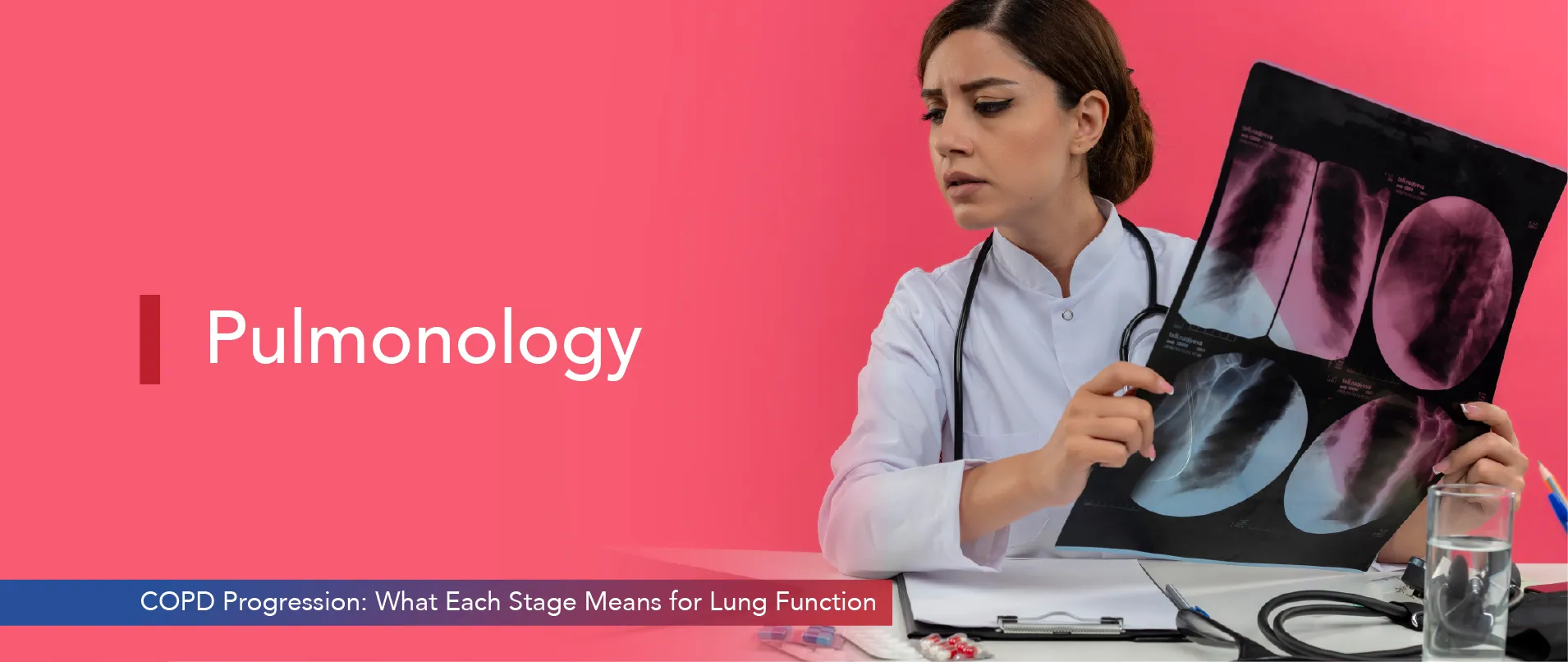
Did you know that chronic obstructive pulmonary disease (COPD) ranks as the fourth leading cause of death globally, causing around 3.5 million deaths in 2021, which represents nearly 5% of total global deaths? Despite its widespread impact, many individuals remain undiagnosed in the early stages because symptoms often develop gradually and are mistaken for ageing or reduced fitness.
COPD is a progressive lung condition that limits airflow and reduces the ability to function efficiently over time. Because the disease advances through defined COPD stages, recognising early changes in breathing patterns becomes essential for timely diagnosis and management.
Understanding COPD stages and identifying COPD symptoms early can significantly improve long-term outcomes.
In this blog, we will discuss the 4 stages of COPD, the associated symptoms, and how each stage impacts lung function and daily life.
COPD stages classify the severity of airflow limitation and guide treatment decisions. Doctors commonly follow the GOLD classification system.
The four COPD stages include:
At this stage, airflow limitation is minimal, and symptoms may be subtle or overlooked.
Common COPD symptoms stage 1 include:
Many individuals do not recognise early COPD symptoms at this stage, which delays diagnosis.
As COPD progresses, symptoms become more noticeable and begin to affect routine activities.
Common COPD symptoms stage 2 include:
COPD symptoms stage 2 often lead patients to seek medical care, making this stage critical for intervention.
In this stage, lung function declines significantly, and symptoms become more limiting.
Symptoms may include:
At this stage, COPD symptoms require structured and continuous management.
Stage 4 COPD represents advanced disease with a serious impact on daily functioning.
Stage 4 COPD symptoms include:
The last stages of COPD symptoms can significantly reduce independence and require specialised care.
Understanding the causes of COPD is essential for prevention and early intervention.
Common risk factors include:
These factors contribute to progressive lung damage, leading to worsening COPD stages.
COPD symptoms vary depending on disease severity but tend to worsen over time.
Key COPD symptoms include:
In the early stages of COPD, symptoms may be mild. However, recognising COPD symptoms stage 1 and COPD symptoms stage 2 allows timely management and slows disease progression.
COPD progression is gradual, but its impact on daily life increases significantly across stages.
In the early stages of COPD, individuals may experience mild breathlessness during physical activity. However, as the disease advances, routine tasks such as walking, climbing stairs, or even dressing may become challenging.
In advanced COPD stages, including stage 4 COPD, patients may experience:
Understanding how COPD stages affect daily functioning helps patients and caregivers plan appropriate support and care.
Accurate diagnosis is essential for identifying COPD stages and initiating appropriate treatment.
Doctors typically use:
These diagnostic tools help determine the 4 stages of COPD and guide treatment decisions.
Although COPD cannot be completely cured, effective treatment can slow progression and improve quality of life.
Management strategies include:
Bronchodilators and inhaled corticosteroids improve airflow and reduce inflammation.
Structured exercise programmes improve breathing efficiency and endurance.
Required in advanced stages, such as stage 4 COPD, to maintain oxygen levels.
Smoking cessation, pollution avoidance, and balanced nutrition are essential.
Prevent respiratory infections that can worsen COPD symptoms.
These approaches help manage COPD symptoms effectively across all stages of the disease.
Managing COPD requires consistent lifestyle adjustments.
Important tips include:
These strategies improve symptom control and enhance quality of life.
Can early recognition of COPD stages truly improve long-term lung health? In many cases, understanding disease progression allows individuals to take proactive steps towards better management and improved outcomes.
Understanding COPD stages, recognising COPD symptoms, and knowing what the 4 stages of COPD are essential for effective care. As the condition progresses, particularly in stage 4 COPD and its later stages, structured and specialised treatment becomes increasingly important.
For individuals seeking expert respiratory care, Sparsh Hospital, a leading Pulmonology Hospital in Bangalore, offers advanced diagnostics and comprehensive treatment for lung conditions. Patients can consult the best Pulmonologist in Bangalore for accurate diagnosis, personalised care, and long-term management of COPD.
The four COPD stages are mild, moderate, severe, and very severe, based on lung function and symptom severity.
COPD symptoms stage 1 includes mild breathlessness, occasional cough, and reduced exercise tolerance.
COPD symptoms in stage 2 include increased breathlessness, persistent cough, fatigue, and reduced stamina.
Stage 4 of COPD involves severe breathing difficulty, frequent exacerbations, and may require oxygen therapy.
Yes. Early diagnosis, lifestyle changes, medication adherence, and pulmonary rehabilitation can help slow the progression of COPD.
Categories: Pulmonology



COPD Progression: What Each Stage Means for Lung Function is available for appointments. Please fill the below form to book an appointment.
Unlock the door to exceptional healthcare, book an appointment with SPARSH Hospital and let your journey to wellness begin.
Copyright © 2026 SPARSH Hospital, A Unit of Shiva & Shiva Orthopaedic Hospital Pvt Ltd.






 Live Chat