Published in : Internal Medicine | April 27, 2026 |
 Medically Reviewed
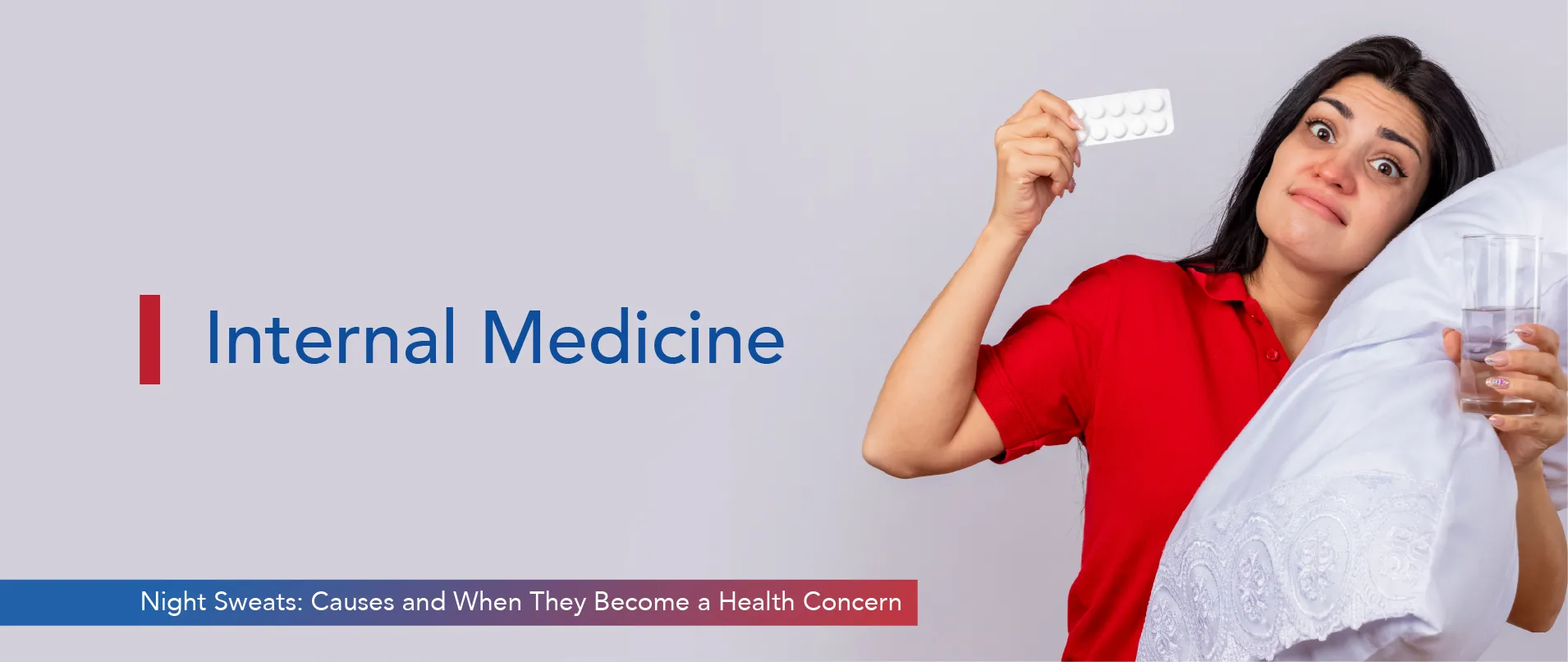
Have you ever woken up in the middle of the night, drenched in sweat, even though the room felt comfortable? Experiencing night sweats occasionally may not always be alarming. However, repeated episodes of waking up sweating or excessive nighttime sweating may indicate underlying health concerns that require medical attention.
Night sweats refer to episodes of heavy sweating during sleep that are not caused by a warm sleeping environment. While mild sweating may occur occasionally, persistent or severe nighttime sweating can disrupt sleep and affect overall health.
Understanding the reasons for night sweats helps individuals determine whether lifestyle factors, infections, hormonal changes, or medical conditions are responsible. Recognising patterns and symptoms is also important in identifying when professional medical evaluation may be necessary.
This blog explains the common causes of night sweats, symptoms to watch for, possible treatment options, and when individuals should consult a doctor.
Night sweats occur when the body produces excessive sweat during sleep. In many cases, sweating is the body’s natural mechanism for regulating temperature. However, excessive nighttime sweating may occur when the body reacts to infection, hormonal changes, medications, or certain medical conditions.
Many individuals experience occasional waking up sweating, particularly during stressful situations, fever, or warm weather. However, frequent or unexplained episodes may suggest underlying causes of night sweating that require evaluation.
In some situations, sweating during sleep can also occur due to sleep-related breathing disorders. For example, some patients wonder whether sleep apnea can cause night sweats. Sleep apnea can indeed contribute to sweating episodes because breathing interruptions place stress on the body.
Several medical and lifestyle factors may contribute to night sweats. Identifying these triggers is the first step in effectively managing the condition.
Common reasons for night sweats include:
Although occasional sweating may be harmless, persistent symptoms should be evaluated by a healthcare professional.
Night sweats may sometimes occur alongside other symptoms. Monitoring these signs can help identify potential health concerns.
Symptoms associated with night sweats may include:
Excessive nighttime sweating, when accompanied by these symptoms, may indicate an infection or another medical condition that requires evaluation.
Recognising these warning signs can help individuals understand when they should i be worried about night sweats and seek medical advice accordingly.
Treatment depends on identifying the underlying causes of night sweat.
Doctors usually begin by reviewing medical history, lifestyle habits, medications, and sleep patterns. Diagnostic tests may be recommended to determine possible infections or hormonal imbalances.
Common treatment approaches may include:
Improving sleep environment, reducing caffeine intake, and managing stress can help reduce excessive nighttime sweating.
If infections, hormonal changes, or sleep disorders are responsible, treating these conditions may resolve the sweating episodes.
Doctors may adjust medications if drug-related side effects contribute to night sweat.
Addressing the root cause is the most effective way to reduce persistent symptoms.
Certain lifestyle changes may help reduce the causes and improve sleep quality.
Helpful tips include:
Additionally, individuals who frequently wake up sweating should monitor their patterns and consult a doctor if symptoms persist.
Early evaluation helps identify the reasons for night sweat and prevents complications.
Occasional sweating during sleep may occur due to environmental factors or temporary illness. However, persistent night sweats or repeated episodes of waking up sweating should not be ignored. Identifying the underlying reasons for night sweats is essential for determining whether lifestyle changes or medical treatment are required.
Recognising symptoms such as excessive nighttime sweating, fever, or unexplained fatigue can help individuals determine when they should i be worried about night sweats. Early medical evaluation allows doctors to diagnose potential conditions and provide appropriate treatment.
For individuals experiencing persistent symptoms, Sparsh Hospital, a leading Internal Medicine Hospital in Bangalore, offers comprehensive medical evaluation and treatment. Experienced specialists provide personalised care to diagnose underlying causes of night sweat and guide patients toward effective management and improved sleep health.
Common causes of night sweats include infections, hormonal changes, stress, certain medications, and sleep disorders.
Occasional sweating upon waking may be due to environmental factors or illness. However, frequent episodes may indicate underlying health conditions.
Yes, sleep apnea can cause night sweats in some individuals. Breathing interruptions during sleep can trigger stress responses that lead to sweating.
You should consult a doctor if excessive nighttime sweating occurs frequently or is accompanied by fever, unexplained weight loss, or fatigue.
Managing stress, maintaining a cool sleeping environment, and addressing underlying health conditions may help reduce the causes of night sweat.
Categories: Internal Medicine





Night Sweats: Causes and When They Become a Health Concern is available for appointments. Please fill the below form to book an appointment.
Unlock the door to exceptional healthcare, book an appointment with SPARSH Hospital and let your journey to wellness begin.
Copyright © 2026 SPARSH Hospital, A Unit of Shiva & Shiva Orthopaedic Hospital Pvt Ltd.






 Live Chat