Published in : Gastroenterology | February 25, 2026 |
 Medically Reviewed
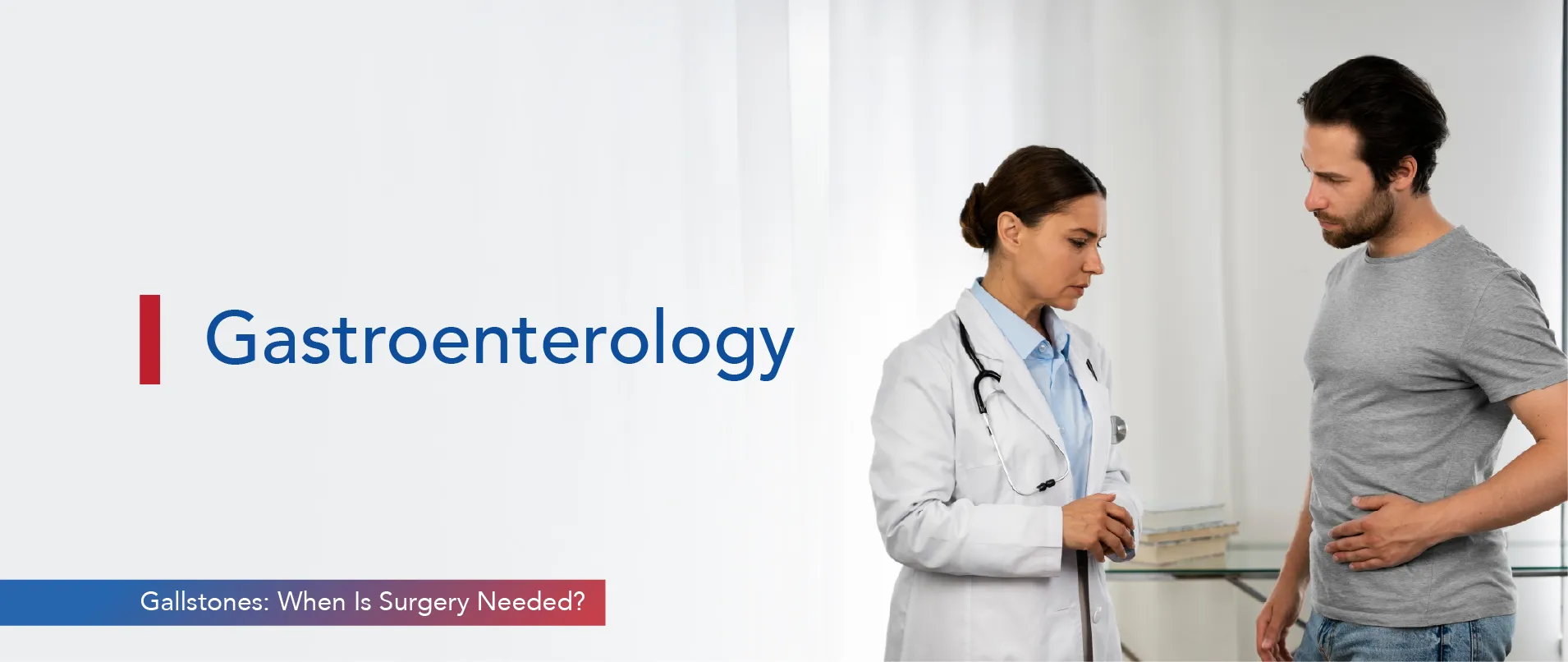
Conventionally, people tend to overlook the possibility of gallstones when affected by digestive issues. But once they begin causing pain or discomfort, they are hard to ignore. Some people may have gallstones for years without even knowing it. Others may feel sharp pain after eating or experience a constant bloat that needs immediate medical help. So, how do you navigate out of this medical condition?
In this blog, we will look at what are gallstones, what causes gallstones, and how to know if gallstone surgery is necessary. From symptoms to treatment options, this post aims to educate readers more about gallstones, streamlining the process of recovery.
Let us begin by understanding how gallstones behave inside the body. The gallbladder is a small sac that is found beneath the lining of the liver. It is responsible for storing bile, an essential digestive fluid that assists fat digestion.
Gallstones begin to form when bile carries excessive cholesterol or other materials that harden into small stones. In many cases, people with gallstones do not notice any symptoms and may not even realise they have them. For others, problems arise when a stone blocks the bile duct or leads to swelling in the area. Common gallstone symptoms include:
Recognising gallstone symptoms early can help prevent long-term complications. Recurring pain should never be ignored and must be addressed immediately by seeking help from expert medical professionals.
Gallstones do not share a single structure or composition. Variations in their chemical composition influence how they develop, how they behave within the gallbladder and whether medical intervention becomes necessary. Understanding these differences forms an important part of clinical evaluation and treatment planning. There are three main types of gallstones:
Cholesterol gallstones are the most commonly diagnosed type. They are usually pale yellow and form when bile contains an excess amount of cholesterol, which crystallises over time.
Pigment gallstones are generally smaller and darker in colour. They develop from bilirubin, a natural substance produced during the normal breakdown of red blood cells and present in bile.
Mixed gallstones contain varying amounts of cholesterol, bile pigments, and other organic materials. Their size and structure differ depending on the composition of these substances and the conditions within the biliary system.
In many cases, the exact type of gallstone cannot be identified without diagnostic tests. However, understanding these categories helps explain why treatment plans vary between individuals and why clinical decisions are based on personal findings rather than a one-size-fits-all approach.
When a patient experiences symptoms that suggest gallstone formation, or if the condition is suspected during routine evaluation, doctors rely on imaging tests to confirm the diagnosis. These investigations are non-invasive, relatively painless, and provide reliable visual evidence to support clinical decision-making.
Doctors use a combination of imaging tests to confirm the presence of gallstones. The choice of test depends on symptoms, clinical findings, and suspected complications.
Ultrasound is the most commonly used first-line test for gallstones. It uses high-frequency sound waves to create images of the gallbladder and can reliably detect stones within it. This test is widely preferred because it is safe, readily available, and highly accurate.
A computed tomography (CT) scan may be recommended in certain situations to obtain detailed cross-sectional images of the abdomen. It is especially useful when complications such as inflammation, infection, or perforation are suspected, or when the diagnosis remains unclear.
MRCP is an advanced imaging technique that provides detailed views of the bile ducts, gallbladder, and pancreas. It is particularly helpful in detecting bile duct blockages or abnormalities in bile flow that may not be visible on a routine ultrasound.
Also known as a hepatobiliary iminodiacetic acid scan, this test evaluates how well the gallbladder functions. It tracks the storage and release of bile and is often used when gallbladder movement or emptying problems are suspected.
Each of these tests plays a distinct role in identifying gallstones and assessing their impact on gallbladder function. Once a diagnosis is confirmed, the next step is deciding whether gallstone removal surgery is required.
Not every individual with gallstones requires surgical intervention. Some people remain asymptomatic throughout their lives, while others experience significant discomfort even with relatively small stones. So how do you know when gallstone surgery becomes necessary? The decision to proceed with surgery is based on the frequency of symptoms, their intensity, and the presence of associated complications affecting the biliary system. The most common gallstone treatment is –
This is a procedure where the gallbladder is surgically removed. It is usually performed when gallstones cause ongoing pain, block the bile ducts, or lead to infection.
Laparoscopic cholecystectomy is a minimally invasive technique performed through small incisions in the abdomen. This method is preferred in most cases due to shorter recovery time, reduced postoperative discomfort, and lower risk of complications.
Open cholecystectomy is considered when laparoscopic procedures are not feasible or when complex conditions such as severe inflammation or anatomical variations are present. This approach involves a larger incision and requires a longer recovery period.
In selected cases where symptoms are mild or surgery is not suitable, conservative management may be recommended. This approach focuses on dietary modifications and clinical monitoring to reduce symptom recurrence and prevent progression.
Certain medical therapies aim to dissolve gallstones using bile acids or other specialised techniques. These options are used infrequently and are generally reserved for specific clinical situations where surgical intervention is not preferred.
After gallbladder removal, the body gradually adapts to changes in bile flow. Bile is delivered directly from the liver to the small intestine, allowing digestion to continue without significant disruption in most individuals. Temporary dietary adjustments may support digestive comfort during the recovery phase.
Gallstones may remain asymptomatic for extended periods or trigger noticeable symptoms depending on their size, location and interaction with the biliary system. In cases where no discomfort or obstruction is present, active treatment may not be immediately required. However, if symptoms such as pain, fever, or digestive disturbances become recurrent, or if there are signs of infection or ductal blockage, gallstone removal should be considered as part of definitive care.
In such cases, it is important to be guided by the right medical support. Specialists at a gastroenterology hospital in Bangalore, such as Dr Veerendra Koujalagi, follow a detailed and thoughtful approach. Clinical evaluation begins with accurate diagnostics, followed by a clear discussion of treatment options tailored to the patient’s condition. His background in advanced laparoscopic techniques and evidence-based care allows for safe surgical planning and effective postoperative management.
For individuals currently experiencing symptoms linked to gallstones, early consultation can prevent escalation. Identifying the underlying cause, reviewing suitable treatment pathways and proceeding with medical or surgical care at the appropriate time may help reduce future complications and restore long-term digestive stability.
The decision to perform gallbladder surgery is not determined by the size of the gallstone alone. Small stones may still obstruct the bile duct or contribute to inflammation and infection. If symptoms are persistent, severe or recurring, surgical intervention may be recommended regardless of the stone’s dimensions.
Signs such as upper abdominal pain following meals, jaundice, recurrent nausea or vomiting, or unexplained fever may indicate gallstone complications. Clinical evaluation, supported by diagnostic imaging and blood tests, helps confirm whether surgical removal of the gallbladder is the appropriate course of action.
Although rare, gallstones can form in children due to genetic predisposition, specific blood disorders or irregularities in bile composition. When symptoms present early, such as abdominal discomfort or digestive issues, a paediatric specialist may recommend further evaluation through ultrasound or other diagnostic tools.
Non-surgical treatment options such as oral bile acid therapy or shockwave lithotripsy may be considered in highly selective cases. These approaches are limited in effectiveness and are suitable only for specific stone types. In most patients with symptomatic gallstones, laparoscopic cholecystectomy remains the most reliable and lasting treatment option.
3 Mins Read
Categories: Gastroenterology











Gallstones: When Is Surgery Needed? is available for appointments. Please fill the below form to book an appointment.
Unlock the door to exceptional healthcare, book an appointment with SPARSH Hospital and let your journey to wellness begin.
Copyright © 2026 SPARSH Hospital, A Unit of Shiva & Shiva Orthopaedic Hospital Pvt Ltd.