Published in : Home Care | October 30, 2026 |
 Medically Reviewed
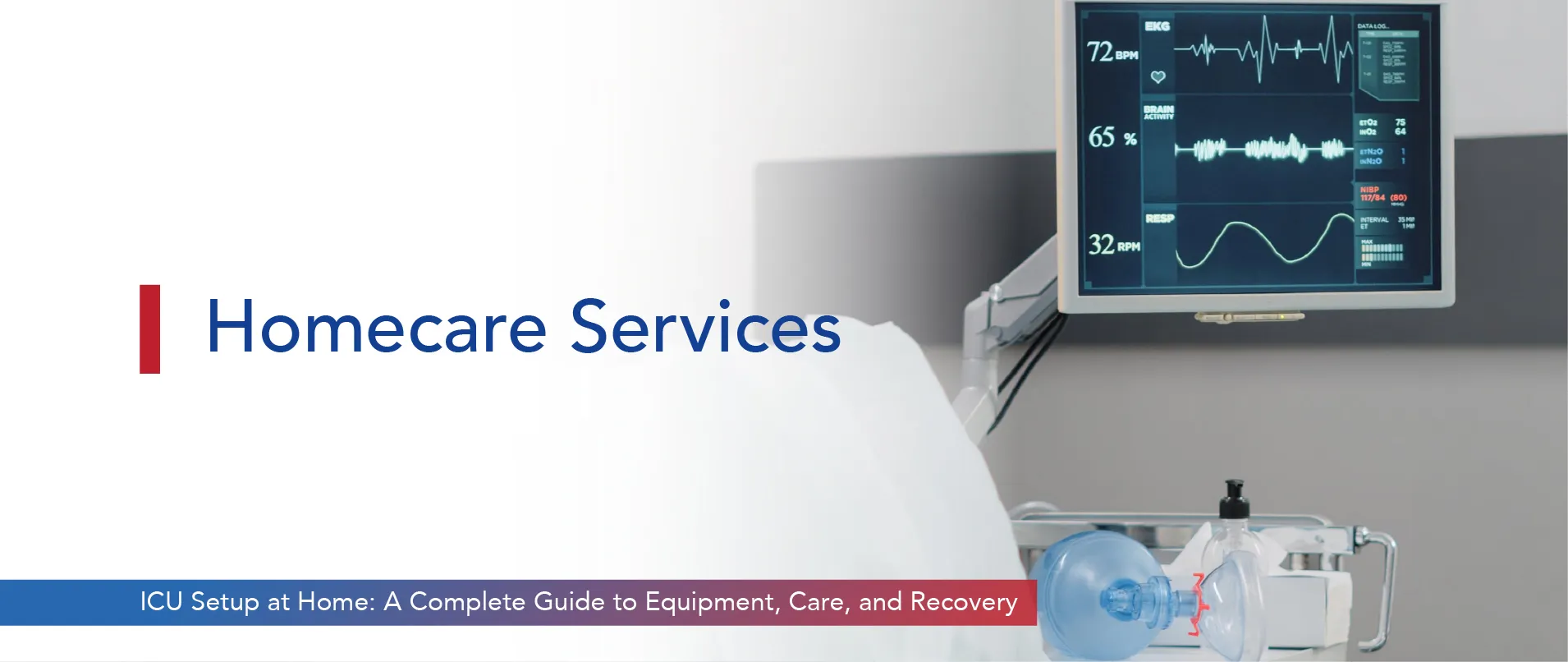
Home ICU care allows patients who need constant care to receive advanced medical support from the comfort of their own homes. It is often recommended for individuals recovering from major surgery, living with chronic illnesses, or requiring long-term ventilator support and continuous monitoring.
With ICU-grade equipment and round-the-clock care from trained healthcare professionals, patients receive close medical supervision while staying at home.
In this article, we’ll discuss who can benefit from home ICU care, how it works, the equipment involved, and the advantages of receiving critical care at home.
A safe transition from hospital to home is an important part of recovery. Hospitals discharge patients when they’re stable, but stable doesn’t always mean simple. Some patients still need serious, hands-on care to manage complex conditions.
Intensive care at home mirrors a hospital room: a specialised bed, cardiac monitors, and suction machines. The home itself has to accommodate all of this, enough space for the equipment, and enough room for caregivers to actually move around and work.
Trained healthcare providers run the whole thing. They handle emergencies and the daily clinical work, which takes a real weight off families who would otherwise be doing this alone. It keeps hospital stays shorter and cuts the risk of a secondary infection.
Home-based care also takes some pressure off hospitals, without asking patients to sacrifice comfort for safety.
The exact list of equipment depends on the patient. But most home ICU setups share a few core machines that keep vital functions tracked and supported.
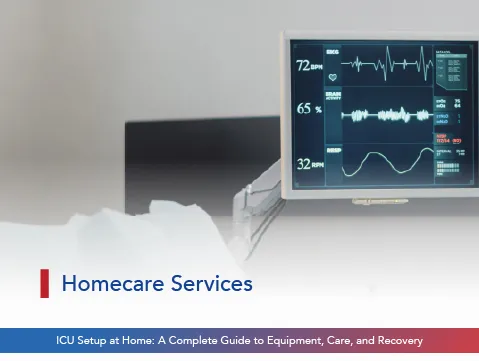
A multi-parameter patient monitor tracks heart rate, blood pressure, and oxygen levels around the clock, allowing early detection and timely medical intervention.
Beyond that: a hospital bed, an oxygen concentrator, a pulse oximeter. Families should buy this equipment from reliable medical suppliers and get it installed properly; a machine that isn’t set up right can’t do its job.
ICU patient care at home depends almost entirely on the nurses. Registered, certified, and experienced nurses monitor vital signs, give medications, and manage feeding tubes day in and day out.
They’re trained for emergencies too, including CPR. And they maintain a high level of hygiene to prevent bedsores and urinary tract infections. These kinds of complications quietly derail a recovery.
Nurses also teach families the basics of home ICU care, including patient positioning, hygiene, and recognising warning signs. This empowers caregivers to provide safe and effective support at home.
Steady oversight from nurses keeps the patient on track with the treatment plan, and they stay in close contact with the doctors to adjust medications or care as needed. This close coordination plays an important role in supporting recovery.
Plenty of patients need oxygen therapy once they’re home, for COPD, severe pneumonia, and similar conditions where blood oxygen needs a boost.
An oxygen concentrator draws oxygen directly from the air and delivers it through a nasal cannula or mask. Caregivers need to keep it running without interruption; a power cut here isn’t a minor inconvenience.
Some patients need a ventilator instead, which breathes for them when their lungs can’t manage on their own. Caregivers should check the settings regularly and keep the tubing clear.
You have to strictly maintain the equipment as medically advised. Oxygen equipment should stay well away from open flames; fire risk is real. Ventilators need regular servicing to keep the air pressure correct.
The weeks after a critical illness matter just as much as the illness itself. Patients often come out of a long hospital stay weak and tired.
Physiotherapists help rebuild that strength, develop exercise routines for mobility, work on breathing for lung function, and provide gentle stretches that slowly bring back independence.
Nutrition matters the most at this time, along with timely medication. A dietitian develops meal plans to meet the patient’s increased calorie and protein needs, as healthy nutrition accelerates tissue repair and supports the immune system.
Recovery does not end when a patient leaves the ICU. Many patients require continued medical care and rehabilitation after a prolonged hospital stay to regain their strength and recover safely.
Home ICU care provides a safe option for stable patients who need long-term medical support. This setup includes calibrated medical equipment and continuous critical care nursing.
Medical evidence shows that recovering at home lowers the risk of hospital-acquired infections. Full recovery depends on physiotherapy, good nutrition, and steady emotional support.
With careful planning, patients can heal in a familiar place without compromising clinical safety.
Sparsh Hospital helps families plan and set up home-based critical care, with expert guidance every step of the way. If a loved one needs advanced medical support at home, don’t wait; book a consultation with a specialist.
It’s hospital-level care delivered in a patient’s home, with the equipment and nursing needed for critically ill patients.
The basic home ICU setup includes a patient monitor, a ventilator, an oxygen concentrator, and a hospital bed. The full list depends on the patient’s condition and the treatment plan.
Yes, as long as trained nurses from a recognised healthcare provider are managing it, checking the device and keeping the air pressure correct.
It means round-the-clock supervision. Trained, experienced and certified nurses handle emergencies, give medications on time, and prevent complications like bedsores.
When a patient needs continuous monitoring or life support after surgery for a long period, it’s better to move home but with utmost care. Planning early makes the move to home-based care much smoother.
3 Mins Read
Categories: Home Care



Home ICU Setup: Equipment, Care & Recovery Guide is available for appointments. Please fill the below form to book an appointment.
Unlock the door to exceptional healthcare, book an appointment with SPARSH Hospital and let your journey to wellness begin.
Copyright © 2026 SPARSH Hospital, A Unit of Shiva & Shiva Orthopaedic Hospital Pvt Ltd.






 Live Chat