Published in : Home Care | October 30, 2026 |
 Medically Reviewed
A knee replacement can significantly reduce pain and improve mobility, but the surgery is only the beginning of the recovery journey. What happens in the weeks and months after the procedure plays a crucial role in determining how well the new joint functions.
Home physiotherapy helps restore strength, improve flexibility, reduce stiffness, and rebuild confidence in movement. While it’s natural to feel hesitant about putting weight on a new knee, guided exercises and consistent rehabilitation are essential for a successful recovery.
In this guide, we’ll explain the recovery timeline after knee replacement, the benefits of home physiotherapy, recommended exercises, and tips to help you regain mobility safely.
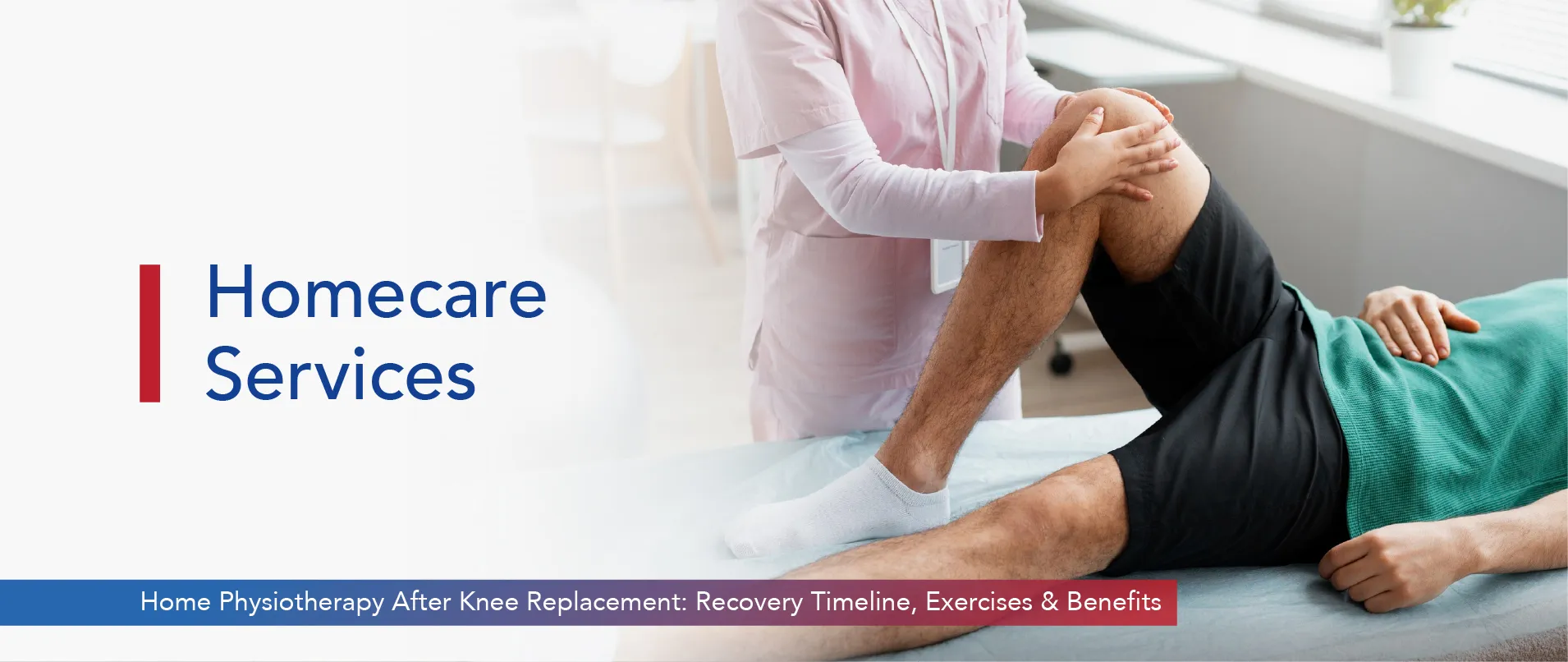
Physiotherapy after knee replacement at home involves a structured programme of exercises and movements. These movements are perfect for restoring function to your knee joint.
A physiotherapist designs an exercise programme based on your stage of recovery. These exercises improve flexibility, strengthen the muscles around the knee, and help reduce swelling. Professional guidance also reduces the risk of placing excessive strain on the healing joint.
Knee replacement rehabilitation at home offers several benefits. Sessions with a physiotherapist provide personalised care based on your needs.
Many patients feel more relaxed when exercising in familiar surroundings, which makes it easier to follow the rehabilitation plan. The physiotherapist can also assess your home and suggest simple changes to reduce the risk of falls.
Home-based rehabilitation eliminates the need to travel to a hospital, which is especially helpful during the early stages of recovery, when walking is difficult.
The knee replacement recovery timeline helps set realistic expectations. Recovery after knee replacement surgery is a time-consuming process that spans several weeks and months.
You should make some changes to your home before returning from the hospital. Remove all obstacles from the floor. Use a stable chair with a firm cushion. Avoid low sofas.
Place everyday items at waist level so you do not have to bend down. Install grab bars in your bathroom. A raised toilet seat is also necessary during the early stages of recovery.
Your physiotherapist will prescribe specific knee replacement exercises. Exercises after knee replacement surgery are vital for regaining strength. Here are common physiotherapy exercises after knee replacement:
Walking after knee replacement is a critical stage of your recovery. Initially, you will use a walking aid to prevent putting your full body weight on the operated leg. Your physiotherapist will teach you the correct technique. They will tell you exactly how much weight you can place on your leg.
Use your walking aid before taking a step. Move your operated leg first, then the other leg. A physiotherapist will tell you when it is safe to increase your walking. Choose shoes with good support to help maintain balance and reduce the risk of falls.
Managing your recovery at home requires professional support. Physiotherapy after knee replacement at home ensures you perform exercises safely and effectively. A qualified physiotherapist will assess your progress and adjust your programme accordingly.
Recovering from knee replacement surgery needs patience, consistency, and an appropriate rehabilitation process. A structured home physiotherapy programme helps to restore strength and improve joint movement.
Prescribed exercises, protecting the new joint, and attending regular follow-up appointments can improve your condition. If you experience persistent pain, swelling, or any signs of complications during recovery, seek medical advice promptly. With professional guidance and a committed rehabilitation plan, most patients regain mobility, confidence, and a better quality of life.
Formal physiotherapy usually lasts for 6 to 12 weeks. However, maintaining knee strength is an ongoing process that you should continue indefinitely.
You should only perform exercises prescribed by your physiotherapist. Doing incorrect movements can damage the new joint or impede your recovery.
Most patients walk without a walking aid within 4 to 6 weeks. Although full recovery of strength and endurance can take up to a year.
Avoid high-impact activities like running or jumping. You should also avoid twisting your knee and sitting in low chairs initially.
Categories: Home Care



Home Physiotherapy After Knee Replacement: Recovery Timeline, Exercises & Benefits is available for appointments. Please fill the below form to book an appointment.
Unlock the door to exceptional healthcare, book an appointment with SPARSH Hospital and let your journey to wellness begin.
Copyright © 2026 SPARSH Hospital, A Unit of Shiva & Shiva Orthopaedic Hospital Pvt Ltd.






 Live Chat