Published in : Oncology | November 19, 2026 |
 Medically Reviewed
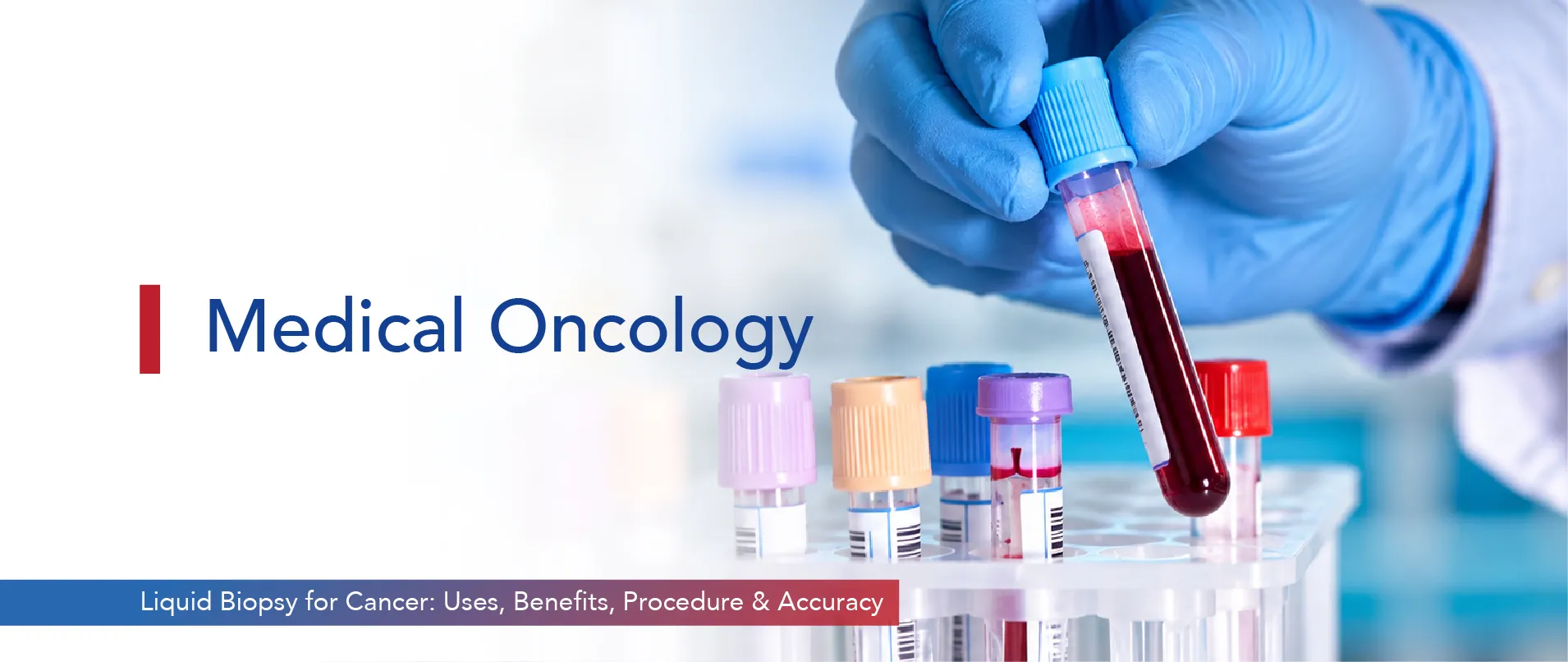
Cancer diagnosis has traditionally relied on tissue biopsy, which involves sampling a small bit of tumour tissue with a needle or surgical knife and examining it under a microscope. While this approach remains the gold standard for diagnosing most cancers, advances in cancer diagnostics have introduced a newer non-invasive tool that provides valuable information with a simple blood test called liquid biopsy which involves detecting cancer cells or their contents in the blood stream. This innovation is transforming how certain cancers are detected, monitored, and managed.
Liquid biopsies can identify circulating tumour DNA (ctDNA), circulating tumour cells (CTCs), and other tumour-derived biomarkers in the blood, making them a valuable tool for identifying specific genetic mutations that can guide personalised cancer therapy, monitoring treatment response and detecting the change in the nature or biology of cancer over time with treatment.
While the use of liquid biopsy is on the rise and the technology continues to get more precise, it is currently used as a companion test along with other diagnostic tests and cannot replace traditional tissue biopsies in most patients.
In this article, we explain what liquid biopsy is, how it works, its benefits and limitations, when is it recommended, and how it compares with a conventional biopsy.
A liquid biopsy is a minimally invasive blood test that looks for cancer-related material circulating in the bloodstream. As cancer cells grow, divide, and die, they release tiny fragments of DNA, RNA, and proteins, or even whole tumour cells, into the bloodstream. The blood sample is analysed by advanced molecular diagnostic techniques to identify these tumour cells or their fragments and cancer related signals that provide important information about the presence and behaviour of cancer.
Unlike a conventional biopsy, which requires removing tissue from the tumour surgically, a liquid biopsy test usually requires only a small blood sample. This makes the procedure quicker, less invasive, and easier to repeat during the course of treatment.
Although both tests help diagnose and manage cancer, they differ significantly in how samples are collected and the information they provide.
| Feature | Liquid biopsy | Traditional biopsy |
|---|---|---|
| Sample collected | Blood sample | Tissue bit removed from the tumour |
| Procedure | Simple blood draw | Needle biopsy or surgery |
| Invasiveness | Minimally invasive | Invasive |
| Recovery | Minimal or no recovery time | May require observation and varies |
| Repeat testing | Easy to repeat multiple times | Repeated biopsies may be difficult or unsafe |
| Information provided | Detects circulating tumour DNA, tumour cells, and specific genetic changes | Provides detailed tissue architecture and confirms cancer diagnosis |
| Primary use | Monitoring treatment, identifying mutations for targeted therapy, cancer detection/ screening in selected cancers | Initial diagnosis, classification, of cancer, and molecular testing when required |
While liquid biopsy for cancer offers several advantages, tissue biopsy remains essential for confirming cancer and determining tumour characteristics.
Doctors may recommend a liquid biopsy test in several clinical situations where additional genetic or molecular information can guide cancer directed treatment better.
A liquid biopsy for cancer may be used to:
Exciting ongoing research is also exploring the role of liquid biopsy in cancer screening for detecting cancer before symptoms develop, these tests are called multi-cancer early detection (MCED) tests. These tests are now available on demand, however liquid biopsy based cancer screening are not a replacement for standard screening methods like mammography, colonoscopy or pap smears
The liquid biopsy procedure is usually very simple and straightforward just like any ordinary blood test and usually completed within a few minutes. A healthcare professional collects a blood sample from a vein in the arm. The sample is then sent to a specialised laboratory, where advanced molecular technologies are used to analyse it for circulating tumour DNA (ctDNA), circulating tumour cells (CTCs), and other cancer-related biomarkers.
Depending on the test being performed, results may take several days to a few weeks. Your oncologist interprets the findings alongside imaging studies, medical history, physical examination, and other laboratory investigations before making treatment recommendations.
The growing use of liquid biopsy for cancer detection offers several important advantages in cancer care.
Some of the key benefits of liquid biopsy include:
These advantages have made liquid biopsy an increasingly valuable tool in modern oncology.
Despite its many advantages, liquid biopsy has certain limitations. Not all cancers release sufficient tumour DNA into the bloodstream to be detected reliably. Some results may require confirmation with a tissue biopsy, particularly when establishing an initial diagnosis.
In addition, liquid biopsy cancer screening is still an evolving field, and researchers continue to evaluate its accuracy for detecting cancers in people without symptoms.
As technology advances, liquid biopsy is expected to play an even greater role in early diagnosis and personalised cancer treatment.
A liquid biopsy represents an important advancement in cancer diagnostics, offering a minimally invasive way to detect tumour-related genetic material through a simple blood test. While it does not replace conventional tissue biopsy in most situations, it has become an invaluable tool for monitoring treatment responses, identifying genetic mutations, detecting recurrence, and supporting personalised cancer care.
If you have been advised to undergo a liquid biopsy for cancer or require specialised cancer evaluation, consult experts at a Medical Oncology Hospital in Bangalore. An experienced Oncologist in Bangalore can determine whether a liquid biopsy is appropriate and develop an individualised treatment plan based on your diagnosis and overall health.
A liquid biopsy is a blood test that detects tumour-derived DNA, circulating tumour cells, or other specific cancer biomarkers released into the bloodstream.
A liquid biopsy test can provide valuable information about cancer but it does not replace tissue biopsy in most cancers. In exceptional situations it is rarely used to diagnose cancer, however a negative test does not reliably rule out cancer.
The liquid biopsy procedure involves collecting a small amount of blood from a vein like any other ordinary blood test, however the sample is analysed in a specialised laboratory capable of identifying tumour-derived genetic material.
Liquid biopsy is minimally invasive, easier to repeat, and is useful for monitoring treatment responses, identifying genetic mutations, guiding targeted therapy and detecting cancer recurrence.
Categories: Oncology

Liquid Biopsy for Cancer: Uses, Benefits, Procedure & Accuracy is available for appointments. Please fill the below form to book an appointment.
Unlock the door to exceptional healthcare, book an appointment with SPARSH Hospital and let your journey to wellness begin.
Copyright © 2026 SPARSH Hospital, A Unit of Shiva & Shiva Orthopaedic Hospital Pvt Ltd.






 Live Chat