Published in : ENT | November 19, 2026 |
 Medically Reviewed
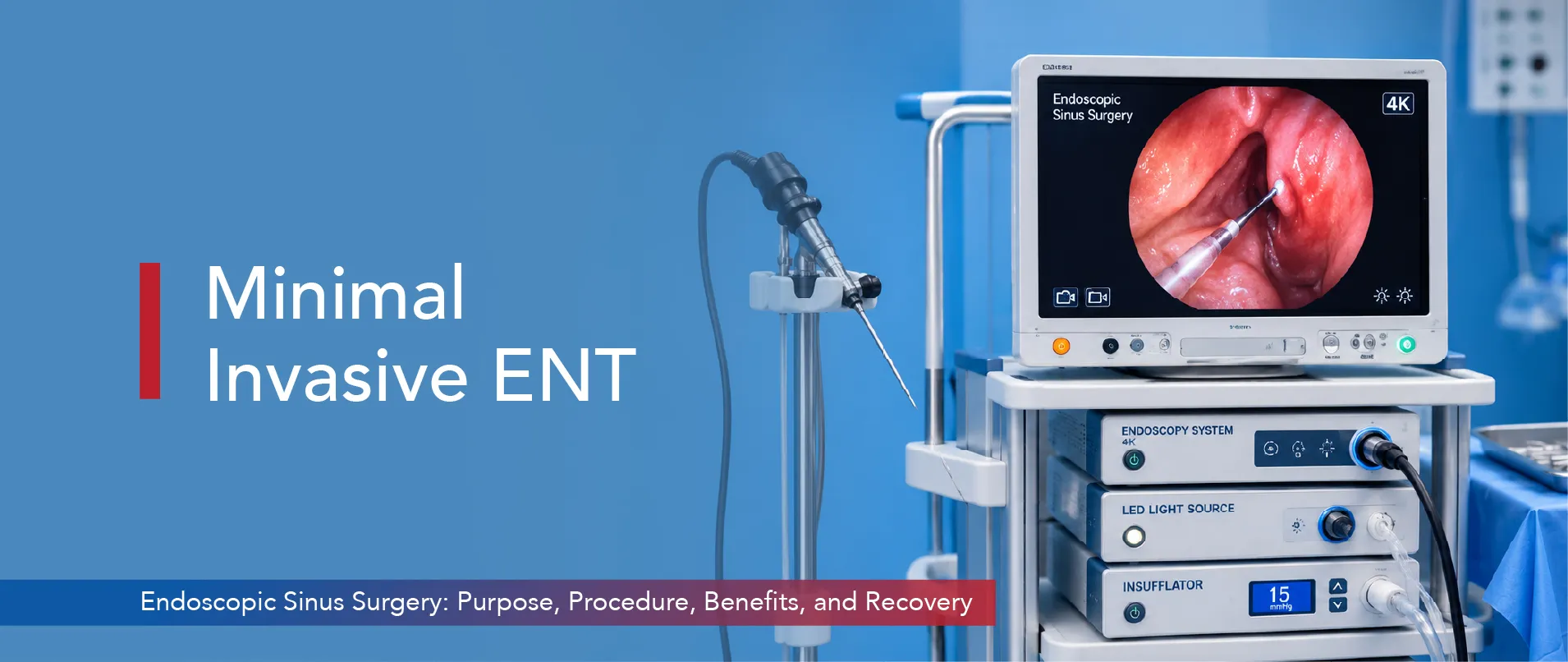
Persistent nasal congestion, facial pressure, headaches, and difficulty breathing can make everyday activities frustrating and significantly affect your quality of life. While most sinus infections improve with medicines, some people continue to experience chronic symptoms despite antibiotics, nasal sprays, and other treatments. In these cases, functional endoscopic sinus surgery (FESS) may be recommended to restore normal sinus drainage and provide lasting relief.
Here we’ll discuss what FESS is, who may need it, how the procedure is performed, its benefits, possible risks, recovery, and what to expect after surgery.
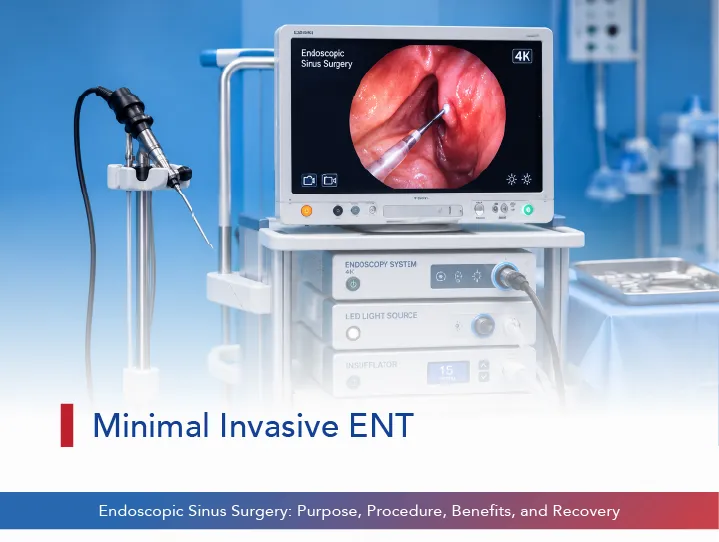
Functional endoscopic sinus surgery (FESS) is a minimally invasive sinus surgery performed to treat chronic or recurrent sinus disease by removing blockages that prevent normal drainage of the sinuses.
The most advanced current generation FESS surgery uses LASER or radiofrequency energy for bleeding control allowing reduced surgical time, same day discharge, no nasal packing and next day return to work for most patients.
Unlike traditional sinus surgery, FESS uses a thin, telescopic instrument called an endoscope, which is equipped with a camera and light source. The surgeon inserts the endoscope through the nostrils to obtain a clear, magnified view of the nasal passages and sinuses without making any external incisions.
During endoscopic sinus surgery, obstructed sinus openings, inflamed tissue, nasal polyps, or other abnormalities are carefully removed to improve ventilation and restore normal sinus function while preserving as much healthy tissue as possible.
Doctors usually recommend functional endoscopic sinus surgery only after conservative treatments have failed to provide adequate symptom relief.
You may benefit from endoscopic sinus surgery if you have:
Before recommending surgery, an ENT specialist performs a detailed examination, often including nasal endoscopy and a CT scan, to confirm that surgery is the most appropriate treatment.
Before surgery, your doctor will review your medical history, perform a physical examination, and ask for imaging studies like a CT scan to evaluate the extent of sinus disease.
The procedure is usually performed under general anaesthesia, although selected patients may undergo surgery under local anaesthesia.
During functional endoscopic sinus surgery, the surgeon inserts the endoscope through the nostrils to visualise the nasal cavity and sinuses. LASER or radiofrequency energy is used for sinus widening, bleeding control and polyp removal allowing reduced surgical time, same day discharge, no nasal packing and next day return to work for most patients.
Because the surgery is performed entirely through the nostrils, there are no visible scars or external marks
In most cases, the procedure takes between 60 and 120 minutes, though the duration depends on the condition’s complexity and the number of sinuses being treated.
The primary goal of functional endoscopic sinus surgery is to improve sinus drainage while preserving normal anatomy and healthy tissue.
Some of the key benefits include:
Many patients also report greater comfort during daily activities after successful surgery.
The sinus endoscopic surgery recovery time varies from person to person, depending on the extent of surgery and individual healing.
Most patients return home on the same day or after a short hospital stay. Mild nasal congestion, slight bleeding, facial pressure, and swelling are common during the first few days after surgery and gradually improve.
Your ENT specialist may recommend saline nasal rinses, prescribed medications, and regular follow-up visits to remove crusting and monitor healing.
Most people can get back to light daily activities within 1 week. However, complete internal healing usually takes 3-4 weeks, and patients should continue following their surgeon’s instructions throughout this period.
Current generation functional endoscopic sinus surgery is one of the safest and lowest risk surgeries across all surgical disciplines, with significant complication or failure rates < 0.5% in most high volume Rhinology centers worldwide.
Possible side effects of FESS surgery include:
Less common complications include infection, excessive bleeding, cerebrospinal fluid leakage, injury to the eye or surrounding structures, and recurrence of sinus disease, which may require additional treatment.
Discussing the potential benefits and risks with your surgeon before the procedure helps you make an informed decision.
Following postoperative instructions is essential for a smooth recovery and the best surgical outcome.
During the recovery period, patients should avoid:
Staying well hydrated, using saline nasal sprays as directed, and taking prescribed medications can promote faster healing and reduce the risk of complications.
Modern Mini invasive LASER assisted Functional endoscopic sinus surgery (FESS) is an advanced and effective treatment for patients with chronic or recurrent sinus disease that does not improve with medication with minimal downtime and discomfort. By restoring normal sinus drainage through a minimally invasive sinus surgery approach, the procedure helps relieve symptoms, reduce recurring infections, and improve overall quality of life with minimal disruption to healthy tissue.
If you’re experiencing long-term sinus problems, consult an experienced ENT Specialist in Bangalore at a leading ENT Hospital in Bangalore. A thorough evaluation and personalised treatment plan can help determine whether endoscopic sinus surgery is the right option to restore healthy breathing and long-term sinus function.
Functional endoscopic sinus surgery (FESS) is a minimally invasive procedure that uses an endoscope to remove blockages, improve sinus drainage, and treat chronic sinus disease.
People with chronic sinusitis, recurrent sinus infections, nasal polyps, or blocked sinuses that do not improve with medication may benefit from endoscopic sinus surgery.
Most patients return to light daily activities within one week, while complete internal healing generally takes three to four weeks.
Common side effects of FESS surgery include mild bleeding, nasal congestion, facial discomfort, temporary crusting, and reduced sense of smell. Serious complications are rare when an experienced ENT surgeon performs the procedure.
Categories: ENT








Endoscopic Sinus Surgery: Purpose, Procedure, Benefits, and Recovery is available for appointments. Please fill the below form to book an appointment.
Unlock the door to exceptional healthcare, book an appointment with SPARSH Hospital and let your journey to wellness begin.
Copyright © 2026 SPARSH Hospital, A Unit of Shiva & Shiva Orthopaedic Hospital Pvt Ltd.






 Live Chat