Breathing is an involuntary action we often take for granted until it becomes difficult. If you experience a persistent cough, wheezing, shortness of breath, or chest tightness, your doctor may recommend a spirometry test to assess how well your lungs are functioning. This simple, non-invasive test helps detect and monitor various respiratory conditions before they become more serious.
According to the World Health Organisation (WHO), chronic respiratory diseases such asthma and chronic obstructive pulmonary disease (COPD) affect hundreds of millions of people worldwide, making early diagnosis and regular monitoring essential. Spirometry plays a crucial role in evaluating lung function and guiding treatment decisions.
In this article, we’ll explain what spirometry is, what a spirometer measures, how the test is performed, how to interpret spirometry test results, and when you should consult a Pulmonologist in Bangalore.
Spirometry is one of the most performed lung function tests used to assess how well your lungs work. It measures how much air you can inhale and exhale, and how quickly you can exhale after taking a deep breath.
The test is painless, non-invasive, and usually performed in a hospital or pulmonary function laboratory using a device called a spirometer. Doctors commonly recommend lung spirometry to diagnose respiratory diseases, monitor existing lung conditions, and evaluate how well treatment is working.
A spirometer measures the volume of air you inhale and exhale, as well as the speed at which air leaves your lungs. These measurements provide valuable information about lung function and help doctors identify whether airflow is normal or restricted.
Some of the key measurements include:
These values help doctors assess the severity of lung disease and determine the most appropriate treatment.
A spirometry test is commonly recommended when patients experience ongoing breathing problems or have risk factors for lung disease. It can help diagnose conditions, monitor disease progression, and evaluate treatment effectiveness.
Your doctor may recommend spirometry if you have:
Spirometry may also be performed before certain surgeries to assess lung function.
The spirometry test is simple and usually completed in an outpatient setting. Before the test, your healthcare provider may ask you to avoid smoking, heavy meals, vigorous exercise, or certain inhaled medications for a few hours, depending on your condition.
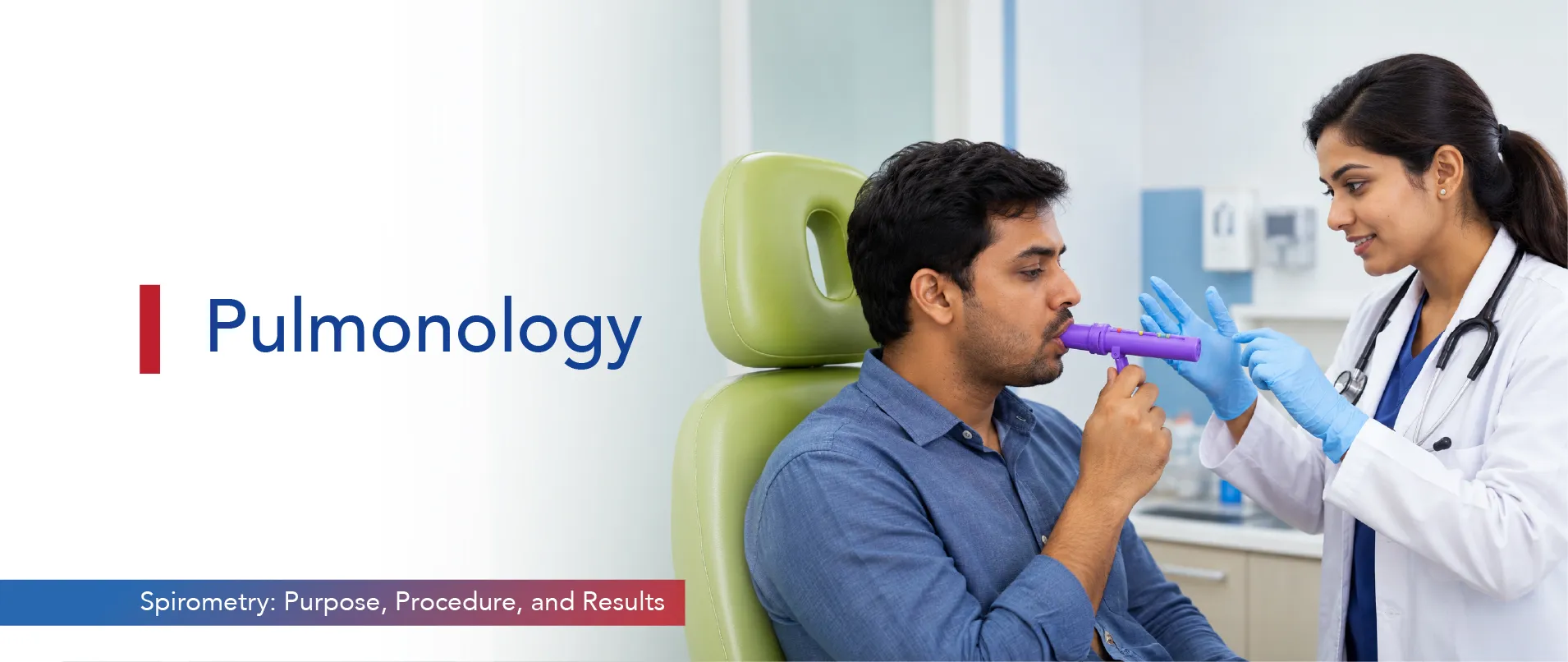
During the test, you’ll be asked to sit comfortably and wear a nose clip to prevent air from escaping through your nose. After taking the deepest breath possible, you’ll seal your lips around the mouthpiece and blow out as forcefully and completely as you can. The test is usually repeated several times to ensure consistent and accurate results.
In most cases, the entire procedure takes about 15 to 30 minutes, including preparation and repeated breathing manoeuvres.
Your spirometry test results are compared with expected values based on your age, height, sex, and ethnicity. These expected measurements are referred to as spirometry normal values.
If your results fall within the normal range, your lung function is considered healthy. Lower-than-normal values may suggest obstructive lung diseases such as asthma or COPD, or restrictive lung diseases that limit lung expansion.
It’s important to remember that a qualified healthcare professional should always interpret spirometry results, as the findings need to be considered alongside your symptoms, medical history, and physical examination.
Although spirometry requires minimal preparation, following your doctor’s instructions helps ensure accurate results.
You may be advised to:
For most people, lung spirometry is extremely safe. Some individuals may experience temporary dizziness, mild shortness of breath, or coughing during the test because it requires forceful breathing. These symptoms usually resolve quickly.
However, spirometry may not be suitable immediately after recent eye, chest, or abdominal surgery, a heart attack, or in certain unstable medical conditions. Your doctor will determine whether the test is appropriate for you.
If you have a persistent cough, wheezing, breathlessness, or difficulty performing daily activities due to breathing problems, it’s important to seek medical evaluation. Individuals with asthma, COPD, a history of smoking, or occupational exposure to dust and chemicals may also benefit from regular lung function assessment.
Consulting an experienced Pulmonologist in Bangalore can help identify the cause of your symptoms early and ensure timely treatment.
Spirometry is a simple, safe, and effective test for evaluating lung function and diagnosing a wide range of respiratory conditions. Whether used to investigate symptoms, monitor chronic lung diseases, or assess treatment response, it provides valuable information that helps doctors make informed clinical decisions.
If you’re experiencing persistent breathing difficulties or have been advised to undergo a spirometry test, consult an experienced Pulmonologist in Bangalore. At a leading Pulmonology Hospital in Bangalore, specialists use advanced diagnostic tools and personalised care to help maintain your lung health and improve your quality of life.
Spirometry is a lung function test that measures how much air you can breathe in and out, and how quickly you can exhale.
A spirometer measures lung volumes and airflow, including FVC, FEV₁, and the FEV₁/FVC ratio, to assess lung function.
Most spirometry tests take about 15 to 30 minutes, including preparation and repeated breathing attempts.
Spirometry test results help identify whether lung function is normal or affected by obstructive or restrictive lung diseases.
3 Mins Read
Categories: Pulmonology



Spirometry: Purpose, Procedure, and Results is available for appointments. Please fill the below form to book an appointment.
Unlock the door to exceptional healthcare, book an appointment with SPARSH Hospital and let your journey to wellness begin.
Copyright © 2026 SPARSH Hospital, A Unit of Shiva & Shiva Orthopaedic Hospital Pvt Ltd.






 Live Chat




 Medically Reviewed