Published in : Emergency Medicine | August 23, 2026 |
 Medically Reviewed
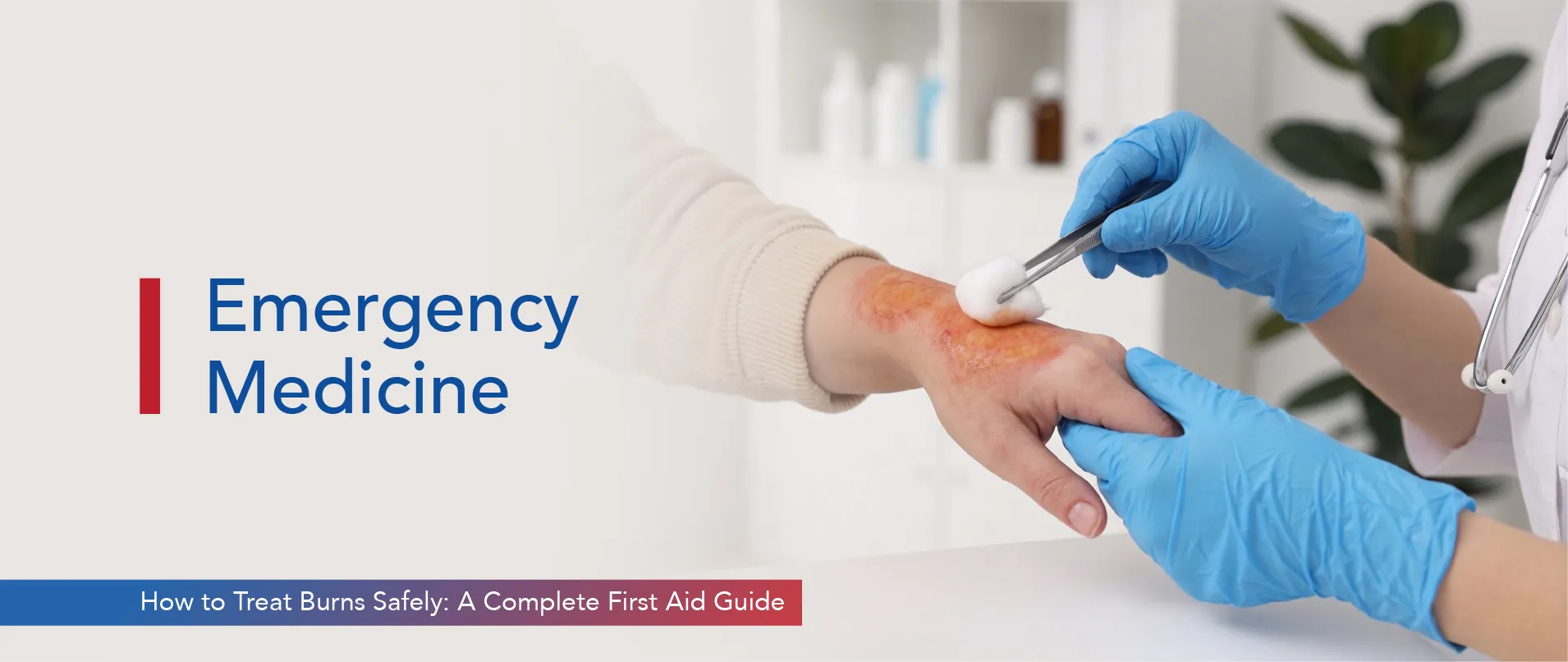
Burns are among the most common injuries worldwide, affecting millions of people every year. According to the World Health Organisation (WHO), burns cause an estimated 180,000 deaths annually, with the majority occurring in low- and middle-income countries.
While many burns are minor and heal with simple first aid, deeper burns can damage the skin, muscles, nerves, and other tissues, requiring urgent medical attention. Knowing how to recognise the severity of a burn and provide the correct first aid can reduce complications, minimise scarring, and improve recovery.
In this guide, we’ll discuss the different types of burns, their causes, first-aid measures, treatment options, and when to seek emergency medical care.
Burns can originate from a wide range of sources, each requiring slightly different first-aid approaches depending on the mechanism of the injury. The 7 causes of burn are:
The depth of tissue damage classifies burns into first-, second-, third-, and fourth-degree burns, ranging from superficial skin irritation to damage extending into muscle and bone.
First-degree burns are the mildest form, affecting only the outermost layer of skin, the epidermis. They typically heal on their own within a week without leaving permanent scarring.
A mild sunburn or brief contact with a hot surface commonly causes a first-degree burn. These burns rarely require medical attention and can typically be managed safely with simple home first aid.
| Do’s | Don’ts |
|---|---|
| Cool the burn under running water for 10-20 minutes | Do not apply ice directly to the burn |
| Cover loosely with a clean, non-stick dressing | Do not use butter, toothpaste, or oily substances |
| Take over-the-counter pain relief if needed | Do not rub or scratch the affected area |
The second-degree burns extend beyond the epidermis into the upper dermis, the second skin layer. These burns are more painful and take longer to heal than first-degree burns.
Hot liquids, steam, or cooking oil are common causes of second-degree burns. These burns require professional wound care and monitoring to prevent infection and ensure proper healing.
| Do’s | Don’ts |
|---|---|
| Cool the burn under running water for 20 minutes | Do not pop or drain any blisters |
| Cover with a sterile, non-stick dressing | Do not apply ice or very cold water |
| Seek medical care for burns larger than a palm | Do not use cotton wool, which can stick to the wound |
Third-degree burns destroy the epidermis and the entire dermis. It often damages the nerve endings and underlying fat tissue. These burns are medical emergencies requiring immediate professional care.
Examples include prolonged exposure to flames or severe electrical burns. These burns always require emergency medical treatment and often surgical intervention, including skin grafting, for proper healing.
| Do’s | Don’ts |
|---|---|
| Call emergency services immediately | Do not remove stuck clothing from the burn |
| Cover loosely with a clean, dry cloth | Do not apply any creams, water, or home remedies |
| Keep the person warm while awaiting help | Do not attempt to treat the burn at home |
Fourth-degree burns are the most severe; they extend through the skin’s layers into muscle, tendons, and bone. These life-threatening injuries require immediate emergency care and extensive, specialised treatment over time.
For instance, prolonged exposure to fire or high-voltage electrical injury. These burns are always medical emergencies, often requiring amputation, extensive surgery, and long-term rehabilitation for survival and recovery.
| Do’s | Don’ts |
|---|---|
| Call emergency services immediately without delay | Do not attempt any home treatment whatsoever |
| Keep the person still and as calm as possible | Do not give the person food or water |
| Cover loosely with a clean, dry cloth if possible | Do not move the person unless necessary for safety |
First aid management of burns follows a simple, structured approach.
Burn first aid begins with cooling the affected area under cool running water for at least 20 minutes.
Remove tight clothing or jewellery before swelling develops.
Cover the burn with a clean, non-stick dressing and seek medical attention if the burn is large, deep, or involves sensitive areas of the body.
Minor burns often heal with home care, while deeper or larger burns require professional medical treatment, dressing changes, and sometimes surgical intervention to support proper healing and reduce scarring.
When should you consult Emergency Medicine Doctors in Bangalore? Certain warning signs indicate that a burn requires immediate professional evaluation rather than home care alone.
Most minor burns heal well with prompt first aid and proper wound care. However, deep burns, burns involving the face or hands, electrical burns, chemical burns, or burns covering large areas of the body require immediate medical attention.
Seeking timely treatment can reduce the risk of infection, scarring, and long-term complications. If you experience a serious burn injury, consult the emergency medicine specialists at Sparsh Hospital for prompt evaluation and expert care.
Cool the burn under running water for 20 minutes, remove tight jewellery or clothing nearby, and cover it with a clean, non-stick dressing.
Seek immediate medical care if the burn is large, deep, affects sensitive areas, or is caused by chemicals, electricity, or smoke inhalation.
No. Popping a blister increases the risk of infection and may delay healing. Keep it clean and protected with a sterile dressing.
Avoid applying ice, butter, toothpaste, oils, or cotton wool, as they can worsen the injury or increase the risk of infection.
First-degree burns usually heal within a week, while second-degree burns may take two to three weeks. Severe burns require longer treatment.
Categories: Emergency Medicine



How to Treat Burns Safely: A Complete First Aid Guide is available for appointments. Please fill the below form to book an appointment.
Unlock the door to exceptional healthcare, book an appointment with SPARSH Hospital and let your journey to wellness begin.
Copyright © 2026 SPARSH Hospital, A Unit of Shiva & Shiva Orthopaedic Hospital Pvt Ltd.






 Live Chat