Published in : Internal Medicine | August 19, 2026 |
 Medically Reviewed
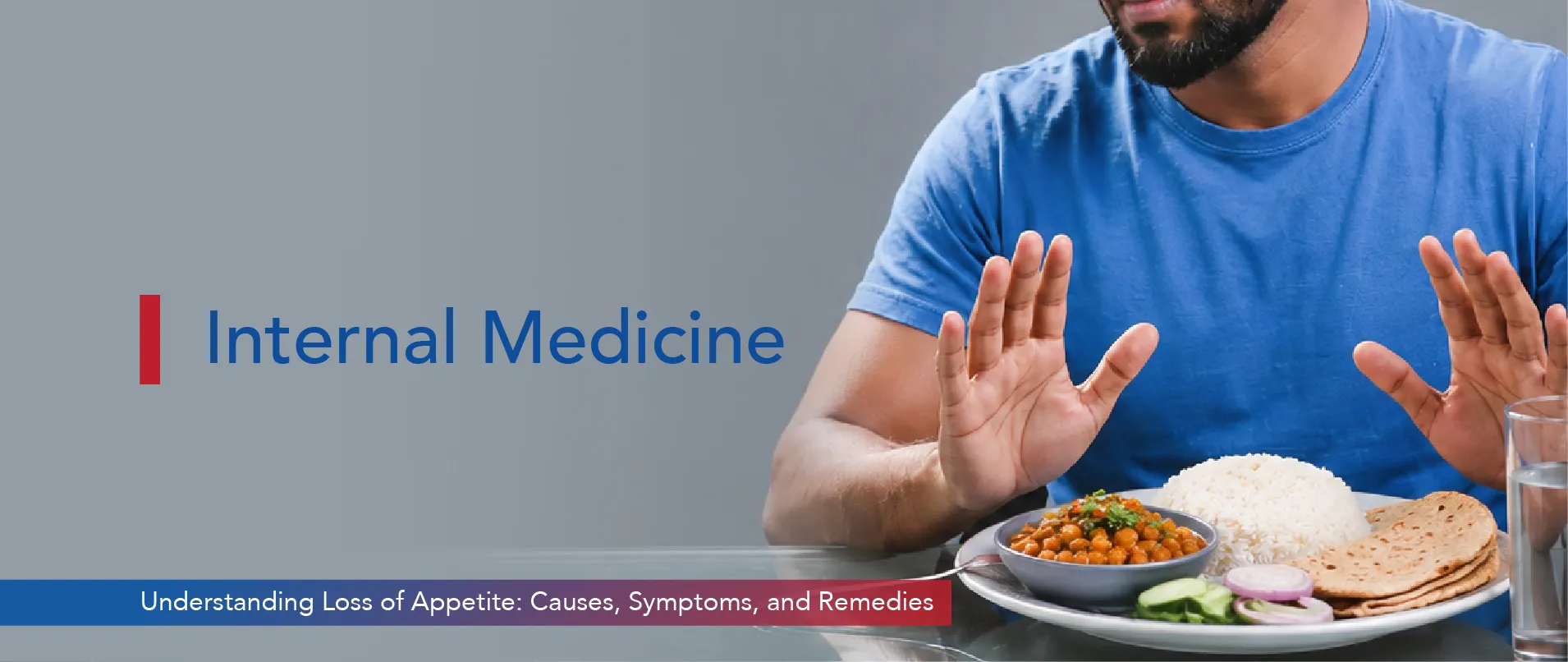
Loss of appetite, also referred to as reduced or poor appetite, is a common clinical symptom that may occur during an acute illness or as a manifestation of an underlying medical, psychological, nutritional or medication-related condition.
A temporary reduction in appetite is often self-limiting. However, persistent loss of appetite, particularly when accompanied by unintentional weight loss, fatigue, nausea, gastrointestinal symptoms or other systemic features, warrants medical evaluation.
Loss of appetite is particularly important in older adults because inadequate nutritional intake can contribute to malnutrition, muscle loss, frailty and functional decline. A 2025 systematic review and meta-analysis found that appetite loss affected approximately 29% of older adults overall, with prevalence varying substantially by clinical setting.
There are many possible causes of loss of appetite in adults. The underlying cause may be temporary, such as an acute infection, or may be related to a chronic medical condition.
Common causes include:
Loss of appetite becomes more clinically significant when accompanied by unintentional weight loss.
In adults, unintentional weight loss of more than 5% of body weight over approximately 6 months is generally considered clinically significant and warrants evaluation. The rate of weight loss, baseline nutritional status, age, comorbidities and associated symptoms should also be considered.
For example, in a person weighing 70 kg, unintentional loss of more than approximately 3.5 kg over six months would meet the commonly used 5% threshold.
In older adults, unintentional weight loss of 5% or more within 6–12 months is associated with increased morbidity and mortality and should prompt clinical assessment.
Importantly, the 5% threshold should not be interpreted as a point below which weight loss is necessarily harmless. Rapid weight loss over a shorter period may be clinically significant even before the cumulative loss reaches 5%.
The clinical assessment should therefore consider both the magnitude and rate of weight loss, together with appetite, dietary intake and associated symptoms.
Depending on the underlying cause, poor appetite may occur alongside:
The combination of symptoms is often more clinically informative than appetite loss alone.
A short-term reduction in appetite during an infection, acute illness or period of stress is often self-limiting.
However, persistent loss of appetite in adults should be assessed if it:
The duration alone does not determine urgency. Rapid or significant unexplained weight loss, gastrointestinal bleeding, persistent vomiting, difficulty swallowing or severe weakness warrant earlier medical evaluation.
Loss of appetite is a symptom rather than a diagnosis. The objective of medical evaluation is to identify the underlying cause.
A physician may ask about:
The examination may include an assessment of:
Depending on the clinical presentation, tests may include:
Further tests such as imaging, endoscopy or other specialised tests should be guided by the patient’s symptoms, examination findings and initial investigation results rather than performed routinely in every patient.
There is no single treatment for loss of appetite because management depends on the underlying cause.
An infection, gastrointestinal disorder, endocrine abnormality or chronic systemic illness should be appropriately diagnosed and treated.
If a medication is contributing to nausea, altered taste or appetite suppression, the physician may consider dose adjustment or an alternative medication where clinically appropriate.
When food intake is inadequate, patients may benefit from:
Appropriate physical activity can help maintain muscle mass and physical function, particularly in older adults. Activity should be individualised according to health status and functional capacity.
Depression, anxiety, chronic stress and other psychological conditions can significantly affect appetite and should be appropriately recognised and treated.
Appetite-stimulating medications should not be routinely prescribed for every patient with poor appetite or unintentional weight loss.
The priority should be to identify and treat the underlying cause, address reversible contributors and maintain adequate nutritional intake. In older adults, appetite stimulants have not consistently been shown to improve clinically important outcomes.
The term anorexia can be used medically to describe loss of appetite. However, it should not automatically be confused with anorexia nervosa, which is a distinct eating disorder.
Hyporexia is sometimes used clinically to describe reduced appetite, particularly in people with chronic illness, frailty or other conditions associated with inadequate nutritional intake.
In clinical practice, the important issue is not simply the terminology, but why appetite has decreased and whether nutritional status is being affected.
Yes. Some cancers can cause loss of appetite and unintentional weight loss. However, malignancy is only one of many possible causes.
Infections, gastrointestinal disorders, chronic systemic diseases, medication effects, endocrine disorders and psychological conditions can also cause poor appetite.
Persistent or unexplained appetite loss, particularly when associated with significant weight loss or other concerning symptoms, should therefore be medically evaluated rather than assumed to be due to cancer.
Some nutritional deficiencies may be associated with reduced appetite, but vitamin deficiency should not automatically be considered the cause of persistent appetite loss.
A physician may recommend nutritional blood tests when the clinical history or examination suggests a nutritional deficiency.
If there is no serious underlying medical condition, the following measures may help maintain nutritional intake:
If appetite remains persistently low despite these measures, medical assessment is advisable.
You should consult a general physician or internal medicine specialist if appetite loss is persistent, particularly when associated with:
Rapid or significant unexplained weight loss, gastrointestinal bleeding, persistent vomiting or difficulty swallowing requires prompt medical evaluation.
Loss of appetite is a symptom, not a diagnosis. While a temporary decrease in appetite is common during minor illnesses or periods of stress, persistent poor appetite can sometimes indicate an underlying medical condition.
A structured medical assessment can help identify potentially reversible causes such as medication effects, gastrointestinal disorders, endocrine abnormalities, infections, psychological conditions or chronic systemic disease. Early recognition is particularly important when appetite loss is accompanied by unintentional weight loss, weakness or functional decline. Prolonged inadequate nutritional intake can contribute to malnutrition and muscle loss.
At Sparsh Hospital, Internal Medicine specialists provide comprehensive evaluation and individualised treatment for persistent loss of appetite, unexplained weight loss and associated medical conditions.
If you have persistent loss of appetite or unexplained weight loss, consult a General Physician in Bangalore for an appropriate clinical evaluation rather than relying solely on appetite stimulants or nutritional supplements.
Common causes include infections, gastrointestinal disorders, medications, endocrine and metabolic disorders, chronic diseases, psychological conditions, malignancy, and nutritional or functional factors.
Persistent or progressively worsening appetite loss, particularly when associated with unintentional weight loss, persistent vomiting, abdominal pain, fever, night sweats, difficulty swallowing or significant weakness, should be medically evaluated.
Yes. Reduced appetite can result in inadequate calorie and protein intake and subsequently lead to unintentional weight loss. However, weight loss may also occur because of underlying diseases that simultaneously cause both appetite loss and increased metabolic requirements.
Yes, but cancer is only one possible cause. Persistent appetite loss with unexplained weight loss or other systemic symptoms requires appropriate clinical evaluation.
Addressing the underlying cause is the most important step. Smaller, frequent meals, nutritious protein-rich foods, adequate hydration, appropriate physical activity and management of gastrointestinal or psychological factors may help.
Depending on the clinical presentation, a physician may recommend blood counts, kidney and liver function tests, glucose testing, thyroid function tests, inflammatory markers and other investigations. Imaging or endoscopy may be considered when indicated by the clinical assessment.
Categories: Internal Medicine









Loss of Appetite Explained: Common Causes, Treatment, and Recovery Tips is available for appointments. Please fill the below form to book an appointment.
Unlock the door to exceptional healthcare, book an appointment with SPARSH Hospital and let your journey to wellness begin.
Copyright © 2026 SPARSH Hospital, A Unit of Shiva & Shiva Orthopaedic Hospital Pvt Ltd.






 Live Chat