Published in : Haematology | July 16, 2026 |
 Medically Reviewed
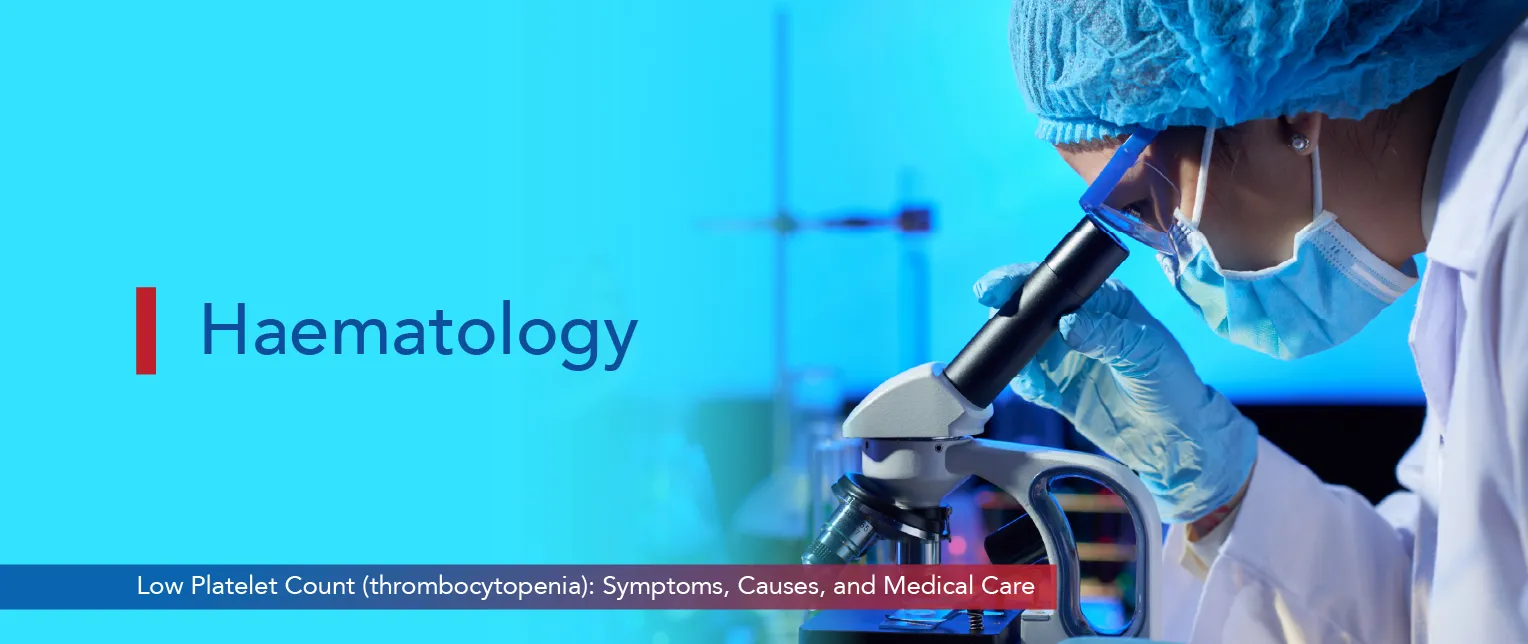
Could frequent bruising, prolonged bleeding, or tiny red spots on the skin indicate an underlying blood disorder? Blood-related conditions are becoming increasingly common, and low platelet levels are one concern that should never be overlooked.
Studies suggest that thrombocytopenia affects a significant number of hospitalised patients globally, particularly those with infections, autoimmune conditions, or chronic illnesses.
Platelets play a vital role in blood clotting, and even a mild reduction in platelet levels can sometimes increase the risk of bleeding complications.
In this blog, we will discuss thrombocytopenia, low platelet count symptoms, causes, diagnosis, treatment options, and when medical attention becomes necessary.
Thrombocytopenia is the medical term for a low platelet count in the blood. Platelets are tiny blood cells that help control bleeding by forming clots when blood vessels are injured.
A normal platelet count usually ranges between 150,000 and 450,000 platelets per microlitre of blood. This is considered the normal range for platelet counts in healthy individuals. When platelet levels fall below this range, the body may have difficulty controlling bleeding properly.
In some people, mild thrombocytopenia may not cause noticeable symptoms. However, severe thrombocytopenia can lead to serious bleeding complications if left untreated.
Platelets are essential for preventing excessive bleeding. Whenever a blood vessel is injured or damaged, platelets gather at the site and help form a clot.
Without enough platelets, even minor injuries may result in prolonged bleeding or bruising. Therefore, maintaining a normal platelet level is important for overall health.
Symptoms of low platelet count may vary depending on how low platelet levels are and the underlying cause of the condition.
Common symptoms include:
In severe thrombocytopenia, spontaneous internal bleeding may also occur, which requires immediate medical attention.
Many patients often ask about the minimum platelet count considered safe. Although this may vary depending on the individual’s health condition, platelet counts below 150,000 are generally considered low.
When platelet counts fall below 20,000, the risk of serious bleeding complications increases significantly.
There are several causes of thrombocytopenia, including infections, immune disorders, and medical conditions.
Certain viral infections, such as dengue, hepatitis, HIV, or viral fevers, can reduce platelet production.
In autoimmune conditions, the immune system mistakenly attacks healthy platelets.
Diseases affecting the bone marrow may interfere with platelet production.
Certain medicines, including chemotherapy drugs and antibiotics, may lower platelet levels.
Deficiency of vitamin B12 or folate may contribute to low platelet production.
Chronic liver disease can affect platelet levels and increase bleeding risk.
Some women may develop mild thrombocytopenia during pregnancy, especially during the later stages.
Mild thrombocytopenia may not always require aggressive treatment and is sometimes detected during routine blood tests. Many individuals remain symptom-free with only slight reductions in platelet count.
However, severe thrombocytopenia can become dangerous and may lead to:
Therefore, early identification of thrombocytopenia severity is extremely important.
Doctors use several tests to confirm thrombocytopenia and identify the underlying cause.
A CBC test measures platelet levels and helps identify abnormalities in blood cells.
This test examines blood cells under a microscope.
In certain cases, bone marrow tests may be required to evaluate platelet production.
These tests help detect liver-related causes of thrombocytopenia.
Doctors may recommend additional investigations depending on symptoms and medical history.
Early diagnosis helps prevent complications and improves treatment outcomes.
Thrombocytopenia treatment depends on the underlying cause and severity of the condition.
Managing infections, autoimmune disorders, or nutritional deficiencies often helps improve platelet levels.
Doctors may prescribe:
Platelet transfusion
In severe thrombocytopenia or active bleeding, platelet transfusions may be necessary.
Patients with low platelet levels are often advised to:
Surgery or advanced treatment
In rare cases, surgery, such as splenectomy, may be considered if other treatments fail.
Some people search for low platelet count treatment options at home. While healthy nutrition and hydration may support recovery, a medical evaluation is essential to identify the actual cause.
Helpful measures may include:
However, self-treatment should never replace proper medical care, especially in severe thrombocytopenia.
Immediate medical attention is necessary if you experience:
Ignoring these symptoms may increase the risk of serious complications.
Thrombocytopenia, or low platelet count, can develop due to infections, autoimmune disorders, medications, or bone marrow conditions. Recognising early symptoms of low platelet count and understanding common causes of thrombocytopenia can help prevent serious bleeding complications.
While mild thrombocytopenia may sometimes improve with proper medical care, severe thrombocytopenia requires immediate attention and specialised treatment.
Understanding the minimum platelet count, maintaining awareness of the normal platelet count and its range, and seeking timely treatment for thrombocytopenia are important for long-term health. Patients experiencing persistent symptoms should consult experienced specialists at a trusted Haematology Hospital in Bangalore.
Seeking guidance from a qualified Haematologist in Bangalore can help ensure an accurate diagnosis, personalised treatment for low platelet count, and better blood health outcomes.
Thrombocytopenia is a condition in which the blood contains fewer platelets than normal, increasing the risk of bleeding and bruising.
Common low platelet count symptoms include easy bruising, bleeding gums, nosebleeds, fatigue, and tiny red spots appearing on the skin.
The normal platelet range is usually between 150,000 and 450,000 platelets per microlitre of blood.
Yes, mild thrombocytopenia may worsen if the underlying cause is not treated properly. Regular monitoring and medical evaluation are important.
Many cases of thrombocytopenia can be treated successfully once the underlying cause is identified and managed appropriately.
Categories: Haematology





Low Platelet Count (thrombocytopenia): Symptoms, Causes, and Medical Care is available for appointments. Please fill the below form to book an appointment.
Unlock the door to exceptional healthcare, book an appointment with SPARSH Hospital and let your journey to wellness begin.
Copyright © 2026 SPARSH Hospital, A Unit of Shiva & Shiva Orthopaedic Hospital Pvt Ltd.






 Live Chat