Published in : General Medicine | November 19, 2026 |
 Medically Reviewed
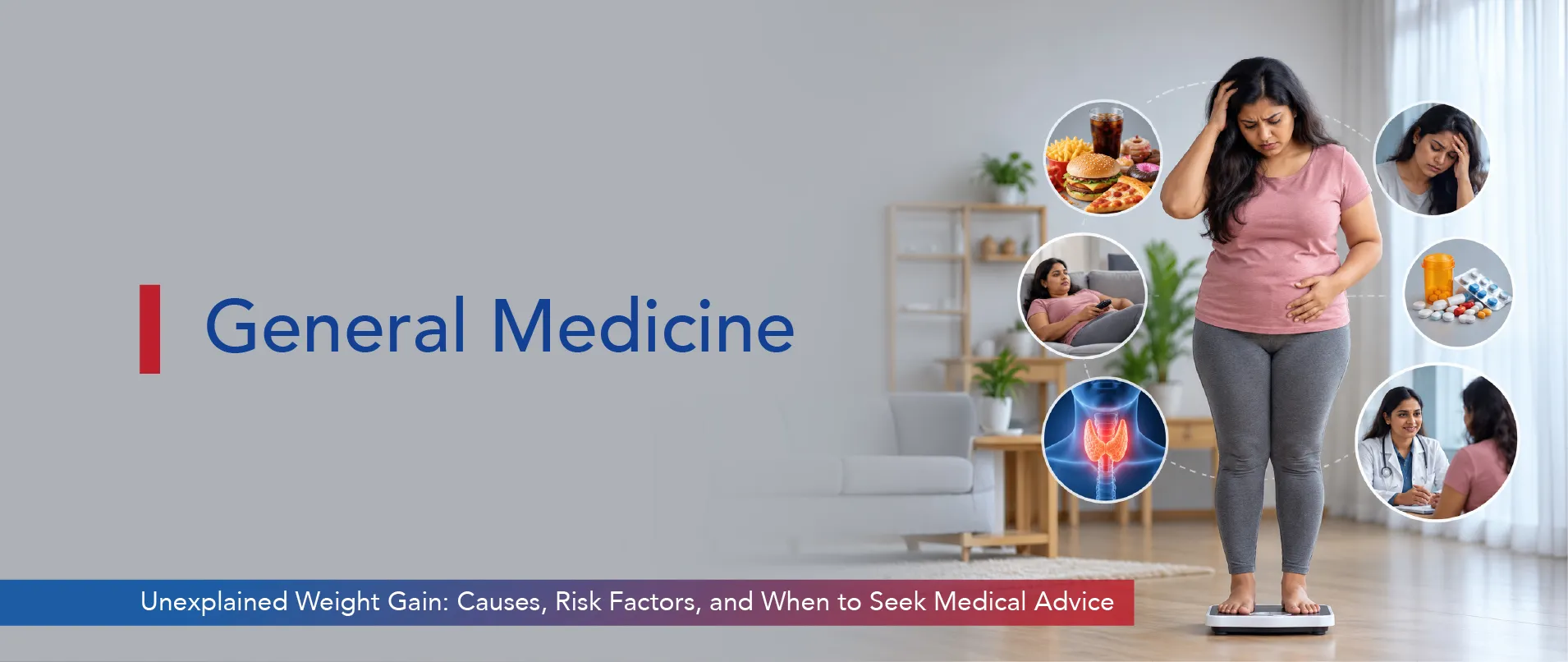
If you’re mindful of what you eat and still notice an unexpected increase in weight, it can be immensely frustrating. While gradual weight gain is common over time, unexplained weight gain, sudden weight gain, or rapid weight gain without an obvious reason may sometimes indicate an underlying medical condition rather than simple lifestyle changes.
According to the World Health Organisation (WHO), more than 1 billion people worldwide are living with obesity, making excess body weight a major global health concern. Hormonal imbalances, thyroid disorders, certain medications, fluid retention, and conditions affecting the heart or kidneys contribute to sudden weight gain or rapid weight gain.
In this article, we’ll discuss the common causes of rapid weight gain, associated weight gain symptoms, risk factors, and when it’s important to seek medical advice.
Unexplained weight gain is an increase in body weight without significant changes in your diet, physical activity, or daily routine. Unlike gradual weight gain that develops over months or years, rapid weight gain can occur within days or weeks and may be due to fluid retention rather than an increase in body fat.
While small weight fluctuations due to hydration, menstrual cycles, or dietary changes are normal, a healthcare professional should evaluate normal, persistent or unexplained weight gain to rule out any underlying medical condition.
Several health conditions and lifestyle factors can contribute to unexplained weight gain.
Hormones regulate metabolism, appetite, and fat storage. Conditions such as hypothyroidism, polycystic ovary syndrome (PCOS), Cushing’s syndrome, and insulin resistance can slow metabolism or alter hormone levels, making weight gain more likely.
Certain medications may contribute to weight gain, including:
If you notice sudden weight gain after starting a new medication, speak with your doctor before stopping or changing your prescription.
Not every case of rapid weight gain is caused by increased body fat. Heart failure, kidney disease, liver disorders, and some medications can cause the body to retain excess fluid, resulting in swelling and a noticeable increase in body weight over a short period.
Changes in daily habits can also contribute to weight gain, including:
Long-term stress and inadequate sleep can affect hormones that regulate hunger, making it easier to gain weight.
Certain factors increase the likelihood of developing unexplained weight gain, including:
Having one or more of these risk factors doesn’t necessarily mean you will gain weight, but timely intervention can be helpful.
In addition to a rising number on the weighing scale, weight gain symptoms may include:
These signs of gaining weight fast may indicate an underlying health condition, particularly if they develop suddenly or worsen over time.
Diagnosing the causes of rapid weight gain begins with a detailed medical history and physical examination. Your doctor will ask about your symptoms, medications, eating habits, physical activity, sleep patterns, and family history.
Depending on your condition, further investigations may include:
Rather than focusing only on body weight, doctors evaluate your overall health to identify the underlying cause and recommend appropriate treatment.
Treatment depends on the underlying cause rather than simply reducing body weight.
Your doctor may recommend:
Avoid self-medicating with weight-loss supplements or following fad diets without medical advice, as these approaches may delay proper diagnosis and treatment.
While occasional changes in body weight are a normal part of life, persistent unexplained weight gain, rapid weight gain, or sudden weight gain without an obvious reason should never be overlooked. Identifying the underlying cause early can help prevent complications and support better long-term health.
If you are experiencing persistent weight gain symptoms or are concerned about the causes of sudden weight gain, consult an experienced physician. At an Internal Medicine Hospital in Bangalore, our specialists at Sprarsh Hospital can perform a comprehensive evaluation, diagnose the underlying condition, and recommend a personalised treatment plan to help you achieve better health and overall well-being.
Unexplained weight gain may result from hormonal disorders, medications, fluid retention, thyroid disease, PCOS, or other underlying medical conditions.
Not always. However, persistent sudden weight gain or rapid weight gain without lifestyle changes should be medically evaluated.
Common signs include swelling, fatigue, breathlessness, clothes fitting tighter, facial puffiness, and difficulty losing weight.
Consult a doctor if you experience persistent unexplained weight gain, swelling, fatigue, breathlessness, or weight gain despite healthy lifestyle habits.
Visit an Internal Medicine Hospital in Bangalore for a comprehensive evaluation and personalised treatment based on the underlying cause.
Categories: General Medicine











Unexplained Weight Gain: Causes, Risk Factors, and When to Seek Medical Advice is available for appointments. Please fill the below form to book an appointment.
Unlock the door to exceptional healthcare, book an appointment with SPARSH Hospital and let your journey to wellness begin.
Copyright © 2026 SPARSH Hospital, A Unit of Shiva & Shiva Orthopaedic Hospital Pvt Ltd.






 Live Chat