Published in : Urology | September 10, 2026 |
 Medically Reviewed
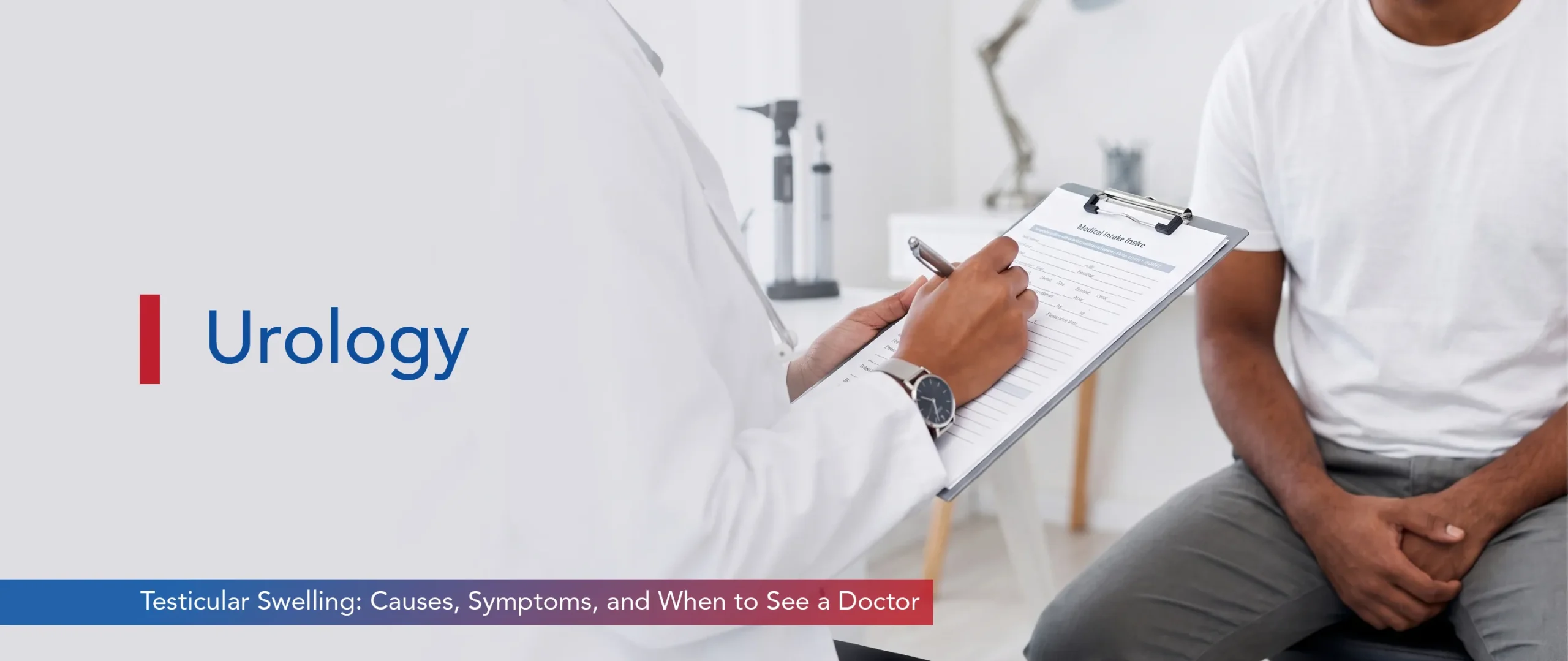
Most men pay attention to pain. But what about swelling that appears without warning?
A change in the size, shape, or appearance of a testicle can be unsettling, and understandably so. While some causes of testicle swelling may be temporary and easily treatable, others may require prompt medical attention to prevent complications affecting fertility, reproductive health, or overall well-being. The challenge is that many men hesitate to seek help, often hoping the problem will resolve on its own.
The reality is that testicular swelling is a symptom that should never be ignored. Understanding what may be causing it and knowing when to seek medical advice can make a significant difference in achieving a timely diagnosis and effective treatment.
In this blog, we will discuss the common causes of testicle swelling, associated symptoms, treatment options, and when it is important to consult a doctor.
Testicle swelling refers to an increase in the size of one or both testicles or the surrounding scrotal tissues. The swelling may develop gradually over time or occur suddenly, depending on the underlying cause.
Some individuals experience swelling without pain, while others may develop significant testicular pain and swelling, redness, tenderness, or a feeling of heaviness in the scrotum.
Testicular swelling is not a disease itself but a symptom of an underlying condition that requires proper medical evaluation.
The symptoms associated with testicle swelling can vary depending on the underlying condition.
Common testicle swelling symptoms include:
Symptoms may appear suddenly or develop gradually over time. A healthcare professional should evaluate persistent swelling.
One of the most common causes is epididymitis, an inflammation of the epididymis, the tube located behind the testicle that stores and transports sperm. Bacterial infections often cause epididymitis and may lead to pain, swelling, tenderness, and discomfort.
However, several other conditions can also cause testicular swelling, making an accurate diagnosis essential.
This condition occurs when the epididymis becomes inflamed, usually due to a bacterial infection. It is a leading cause of testicular pain and swelling in adults.
Orchitis refers to inflammation of one or both testicles. Viral infections such as mumps and certain bacterial infections can cause this condition.
A hydrocele occurs when fluid accumulates around the testicle, leading to noticeable swelling. It is often painless but can become uncomfortable if the swelling is significant.
A varicocele is an enlargement of the veins within the scrotum. It may cause swelling, a feeling of heaviness, or discomfort, particularly after prolonged standing.
An inguinal hernia develops when tissue pushes through a weakened area of the abdominal wall and extends into the groin or scrotum.
Testicular torsion occurs when the spermatic cord twists, cutting off the blood supply to the testicle. This is a medical emergency that requires immediate treatment.
Direct injury during sports, exercise, or accidents can lead to temporary swelling, bruising, and pain.
Although less common, persistent swelling or a painless lump may sometimes indicate testicular cancer and should always be assessed promptly.
Diagnosing the cause of testicular swelling begins with a detailed medical evaluation.
Your doctor may recommend:
A scrotal ultrasound is one of the most useful investigations because it helps identify infections, fluid collections, blood flow abnormalities, and structural changes within the testicles.
Treatment for testicular swelling depends on the underlying cause identified during evaluation.
If an infection is responsible for the swelling, antibiotics may be prescribed to eliminate the infection and reduce inflammation.
Pain relievers and anti-inflammatory medications can help manage discomfort and swelling.
Scrotal support garments may improve comfort and reduce strain during recovery.
Certain conditions require surgery, including:
Early treatment often improves outcomes and helps prevent complications.
Immediate medical attention is required if you experience:
Delaying treatment in these situations can result in permanent damage to the affected testicle.
Certain conditions associated with testicular swelling may affect fertility if left untreated.
These include:
Timely diagnosis and treatment can help protect reproductive health and reduce the risk of long-term complications.
Many men delay seeking medical advice when they notice swelling because it may not seem urgent, especially if there is little or no pain. However, changes in the testicles should never be dismissed or ignored. Whether caused by an infection, injury, fluid accumulation, or a more serious underlying condition, early evaluation can help identify the cause and prevent potential complications.
At Sparsh Hospital, patients have access to advanced diagnostic services, expert urological care, and personalised treatment plans. If you are experiencing persistent symptoms or have concerns about testicular health, consult an experienced Urologist in Bangalore at a trusted Urology Hospital in Bangalore to help ensure the right diagnosis and treatment at the right time.
Epididymitis, an inflammation of the epididymis often caused by bacterial infection, is one of the most common causes of testicle swelling.
Rest, supportive underwear, cold compresses, and avoiding strenuous activities may help. However, persistent swelling should always be evaluated by a doctor.
Some mild cases may improve their own, but ongoing swelling should be evaluated to identify and treat the underlying cause.
No. Conditions such as hydrocele and some testicular tumours may cause swelling with little or no pain.
Categories: Urology

Testicular Swelling: Causes, Symptoms, and When to See a Doctor is available for appointments. Please fill the below form to book an appointment.
Unlock the door to exceptional healthcare, book an appointment with SPARSH Hospital and let your journey to wellness begin.
Copyright © 2026 SPARSH Hospital, A Unit of Shiva & Shiva Orthopaedic Hospital Pvt Ltd.






 Live Chat