Published in : Cardiac Sciences | September 10, 2026 |
 Medically Reviewed
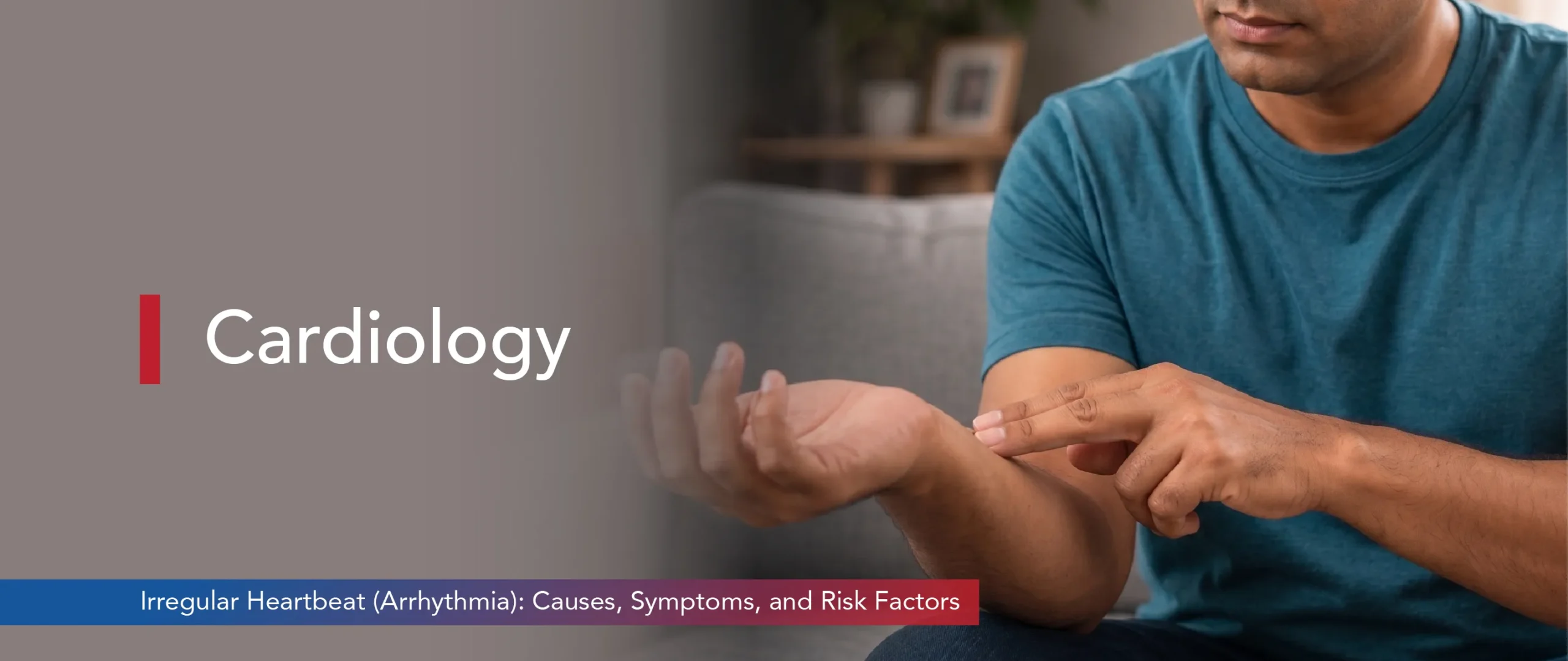
Have you ever felt your heart racing, fluttering, skipping a beat, or beating too slowly? While occasional changes in heart rhythm are often harmless, persistent or recurring irregular heartbeats may indicate an arrhythmia.
According to the American Heart Association, atrial fibrillation (AFib), the most common type of arrhythmia affects more than 60 million people worldwide, and its prevalence continues to rise with age. Although many arrhythmias can be effectively managed, some may increase the risk of stroke, heart failure, or sudden cardiac arrest if left untreated.
In this article, we’ll discuss the different types of arrhythmia, their causes, symptoms, diagnosis, treatment options, and when you should seek medical attention.
The abnormal heart rate patterns that fall under Arrhythmia vary widely in their origin, mechanism, and severity. Broadly, they are grouped by where in the heart the disruption begins and how the electrical signals are affected.
Atrial fibrillation, or AFib, is the most common type of arrhythmia among irregular heartbeat types. It occurs when the heart’s upper chambers fire chaotically, falling out of sync with the lower chambers and disrupting the smooth, coordinated flow of blood.
Some common symptoms include a rapid, irregular heartbeat, fatigue, shortness of breath, dizziness, and occasional chest discomfort. It can range from barely noticeable to debilitating. Because the chaotic contractions allow blood to pool and clot within the heart, AFib carries a significant stroke risk.
Treatment focuses on three goals: rate control with beta-blockers, rhythm restoration with cardioversion or catheter ablation, and stroke prevention with blood thinners.
Ventricular fibrillation, or VFib, is a type of irregularity that sits at the opposite end of the severity spectrum. Rather than a rapid but sustainable rhythm, VFib causes the heart’s lower chambers to quiver uselessly, producing no effective pulse.
The signs are often immediate and catastrophic, such as a sudden collapse, loss of consciousness, and complete cessation of effective heart function. This is a cardiac emergency where every second counts.
Treatment begins with immediate cardiopulmonary resuscitation (CPR), followed by defibrillation., followed by defibrillation to shock the heart back into rhythm. Emergency medications may also be administered during resuscitation. Further, the survivors are typically fitted with an implantable cardioverter-defibrillator to prevent recurrence.
Tachycardia is defined as a resting heart rate above 100 beats per minute. For this, the clinical significance depends on its origin within the heart. The supraventricular tachycardia (SVT) arises above the ventricles, causing sudden palpitations, chest fluttering, and lightheadedness. It is usually manageable and rarely immediately dangerous.
The Ventricular tachycardia (VTach) originates in the lower chambers and can be life-threatening, producing dizziness, chest pain, and loss of consciousness in severe episodes. Sustained VTach can degenerate into VFib without prompt intervention.
Some more conditions are often confused with one another. The table below summarises the remaining arrhythmia types, such as Atrial Flutter, Bradycardia, Premature Contractions, and Long QT Syndrome. It covers their irregular heartbeat symptoms and target treatments for quick reference.
| Type | Peculiar Symptoms | Target Treatment |
|---|---|---|
| Atrial Flutter | Fast but regular heartbeat; fatigue; mild breathlessness | Rate/rhythm-control medications; blood thinners; catheter ablation |
| Bradycardia | Persistent fatigue; dizziness; fainting; confusion | Pacemaker for symptomatic cases; medication review; thyroid treatment |
| Supraventricular Tachycardia (SVT) | Sudden palpitations; chest fluttering; lightheadedness | Vagal manoeuvres; rate-control medications; catheter ablation |
| Ventricular Tachycardia (VTach) | Dizziness; chest pain; loss of consciousness in severe episodes | Emergency cardioversion; antiarrhythmic drugs; implantable defibrillator |
| Premature Contractions | Skipped beat sensation; brief flutter; strong thump after a pause | Reduce caffeine/alcohol/stress; beta-blockers; ablation if frequent |
| Long QT Syndrome | Fainting during exercise or stress; seizures; family history of sudden cardiac events | Avoid QT-prolonging drugs; beta-blockers; implantable defibrillator |
Several overlapping factors can raise a person’s likelihood of developing Arrhythmia. A family history of heart disease or arrhythmia, chronic high blood pressure, and coronary artery disease are among the most significant lifestyle risk factors, such as smoking, excessive alcohol consumption, high caffeine intake, obesity, diabetes, and thyroid disorders, which can also increase the risk of developing arrhythmias.
This adds to the burden, as do conditions like diabetes, thyroid disorders, and obesity. Left unmanaged, certain arrhythmias carry serious long-term consequences, including stroke, heart failure, and in the most severe cases, sudden cardiac arrest.
Diagnosing an irregular heart rate begins with a detailed medical history and physical examination, followed by targeted tests to accurately identify the specific type and underlying cause of the Arrhythmia.
Arrhythmia treatment, procedure, and management depend entirely on the type, severity, and underlying cause identified during diagnosis, ranging from simple lifestyle changes to advanced medical procedures for serious cases.
Although occasional palpitations may not always indicate a serious problem, persistent or recurring irregular heartbeats should never be ignored. Early diagnosis helps identify the underlying cause and reduces the risk of complications such as stroke, heart failure, and sudden cardiac arrest. If you experience frequent palpitations, dizziness, fainting, chest pain, or shortness of breath, consult a cardiologist promptly.
At Sparsh Hospital, our experienced cardiac specialists provide comprehensive evaluation and advanced treatment for a wide range of heart rhythm disorders, helping patients achieve better long-term heart health.
Ventricular fibrillation, ventricular tachycardia, asystole, and pulseless electrical activity are life-threatening arrhythmias that require immediate emergency treatment.
Yes. Deficiencies in vitamin B12, folate, or iron may contribute to palpitations in some people. Your doctor can identify the underlying cause through appropriate tests.
Some arrhythmias can be successfully treated with medication, catheter ablation, or implanted devices. Others can be effectively managed with ongoing treatment and regular follow-up.
Not all arrhythmias are preventable, but maintaining a healthy lifestyle, controlling blood pressure and diabetes, avoiding smoking, and limiting alcohol and caffeine can reduce the risk.
Categories: Cardiac Sciences




Irregular Heartbeat (Arrhythmia): Causes, Symptoms and Risk Factors is available for appointments. Please fill the below form to book an appointment.
Unlock the door to exceptional healthcare, book an appointment with SPARSH Hospital and let your journey to wellness begin.
Copyright © 2026 SPARSH Hospital, A Unit of Shiva & Shiva Orthopaedic Hospital Pvt Ltd.






 Live Chat