Published in : ENT | August 19, 2026 |
 Medically Reviewed
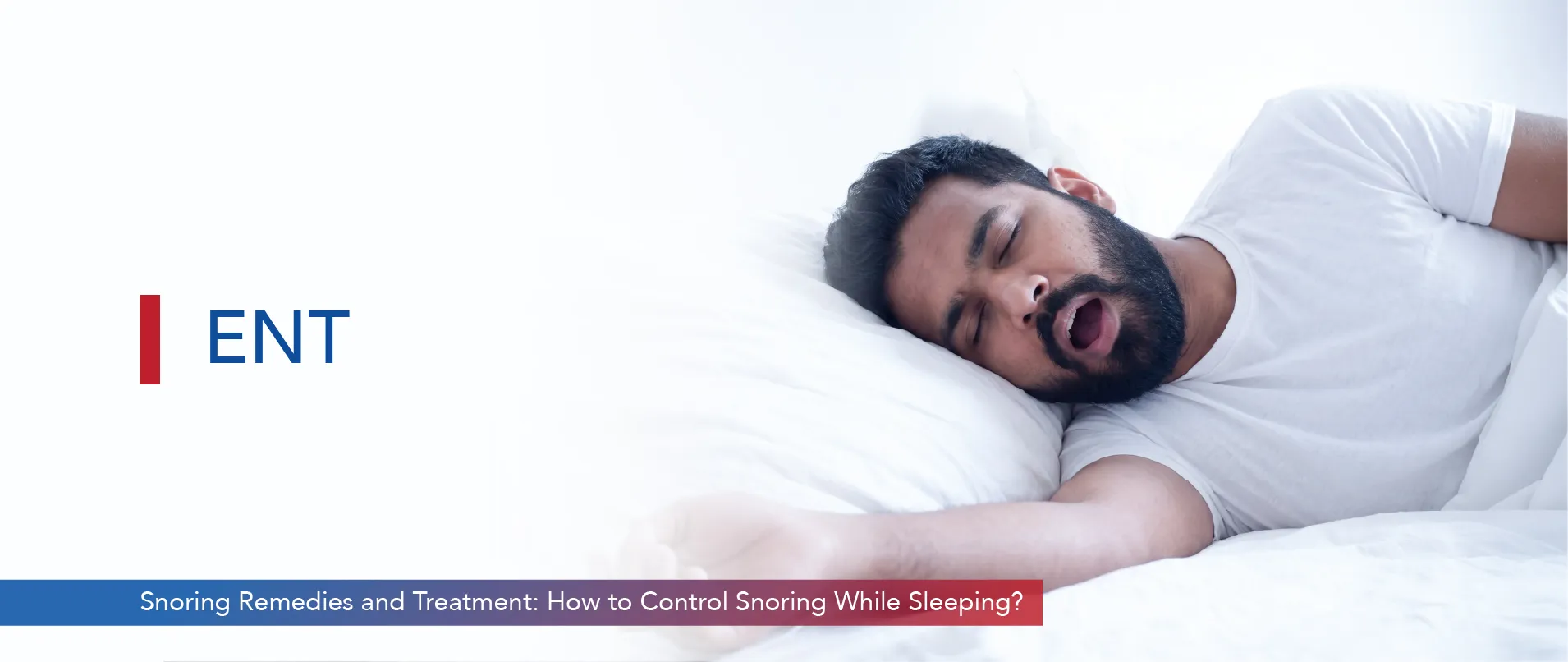
Snoring is common and can affect people of all ages. Studies have estimated that habitual snoring affects approximately 40% of adult men and 24% of adult women, although prevalence varies depending on the population studied and how snoring is defined.
Occasional snoring may not be a cause for concern. However, frequent or persistent snoring, particularly when associated with pauses in breathing, choking or gasping during sleep, excessive daytime sleepiness or unrefreshing sleep, may be a sign of obstructive sleep apnoea (OSA) and should be evaluated.
In this article, we discuss why snoring occurs, common risk factors, how it is evaluated and treatment options that can help reduce snoring and improve sleep quality.
Snoring occurs when airflow through the upper airway becomes partially restricted during sleep. As the airway narrows, the tissues of the soft palate, uvula, tongue and surrounding structures may vibrate as air passes through, producing the sound of snoring.
Several factors can contribute to airway narrowing, including nasal blockage, excess weight, enlarged tonsils, anatomical abnormalities, sleeping position, alcohol consumption and ageing.
Snoring does not always mean that a person has obstructive sleep apnoea. However, persistent snoring should not be ignored, particularly when it is accompanied by symptoms suggestive of disturbed breathing during sleep.
Men are more likely to snore, partly because of differences in upper-airway anatomy and the distribution of fatty tissue around the neck. Excess weight, alcohol consumption, smoking and ageing can further increase the risk.
Women can also develop persistent snoring, particularly with increasing age and after menopause. Hormonal changes, pregnancy, weight gain, nasal congestion and other factors that narrow the upper airway may contribute to snoring.
There is no single cause of snoring. Common contributing factors include:
In some people, snoring may be associated with obstructive sleep apnoea, in which the upper airway repeatedly becomes narrowed or blocked during sleep.
No. Snoring by itself does not necessarily indicate a serious disorder, but persistent snoring can sometimes be a symptom of obstructive sleep apnoea.
Warning signs include:
If these symptoms are present, medical evaluation is advisable.
Untreated obstructive sleep apnoea can affect more than just sleep quality. Repeated interruptions in breathing during sleep can cause intermittent drops in blood oxygen levels and place stress on the cardiovascular system.
Over time, untreated OSA may be associated with an increased risk of high blood pressure, cardiovascular disease, abnormal heart rhythms, stroke and problems with blood sugar control. It can also contribute to excessive daytime sleepiness, poor concentration, mood changes and an increased risk of accidents.
Recognising and treating obstructive sleep apnoea can help improve sleep quality and reduce its associated health risks.
Evaluation begins with a detailed medical history and examination of the nose, throat and upper airway. The doctor may assess nasal obstruction, the tonsils, tongue position, palate and other anatomical factors that could contribute to airway narrowing.
If obstructive sleep apnoea is suspected, a sleep study may be recommended. Depending on the individual’s symptoms and risk factors, this may be a home sleep apnoea test or overnight polysomnography performed in a sleep laboratory.
Nasal endoscopy may be useful in selected patients to assess nasal and upper-airway anatomy.
CT or other imaging is not routinely required to diagnose snoring or obstructive sleep apnoea. However, it may be recommended in selected cases when a structural abnormality requires further evaluation.
Some simple measures can help reduce snoring, particularly when symptoms are mild or related to lifestyle and sleeping position:
Nasal strips may improve the sensation of nasal airflow in some people with nasal obstruction, but they do not treat obstructive sleep apnoea.
There is no single home remedy that can permanently stop snoring because treatment depends on its underlying cause. However, certain lifestyle measures may help reduce snoring in appropriate individuals.
Excess tissue around the neck can contribute to narrowing of the upper airway. Weight management may reduce snoring and can also be beneficial for people with obstructive sleep apnoea.
Snoring may worsen when sleeping on your back because the tongue and soft tissues can move backwards and contribute to airway narrowing.
Alcohol can relax the muscles of the upper airway and may worsen snoring and obstructive sleep apnoea. Avoiding alcohol, particularly close to bedtime, may therefore be helpful.
Caffeine does not directly cause upper-airway relaxation, but excessive or late-day caffeine consumption can interfere with sleep quality in some people.
Treatment depends on whether the person has primary snoring or obstructive sleep apnoea, as well as the underlying anatomical and lifestyle factors.
Treatment options may include:
Weight management, sleeping on the side, avoiding alcohol close to bedtime, stopping smoking and maintaining healthy sleep habits may help reduce snoring in appropriate individuals.
If nasal obstruction contributes to snoring, treatment may include saline nasal irrigation, appropriate medication for allergic rhinitis or other treatments depending on the underlying cause.
A custom, titratable mandibular advancement oral appliance may be considered for selected adults with primary snoring or obstructive sleep apnoea, following appropriate medical evaluation.
These devices work by positioning the lower jaw forward to help maintain a more open upper airway during sleep.
For patients diagnosed with obstructive sleep apnoea, positive airway pressure (PAP), including CPAP, is a highly effective treatment. It works by providing a continuous flow of air that helps keep the upper airway open during sleep.
Surgery may be considered in selected patients when there is a correctable anatomical cause of airway obstruction or when other appropriate treatments are unsuitable or ineffective.
The type of surgery depends on the location and nature of the airway obstruction and the individual’s clinical findings and sleep-study results.
Surgical options may include septoplasty, turbinate reduction, sinus procedures, palatal procedures such as radiofrequency or coblation-assisted techniques, pharyngoplasty, tonsillectomy or other site-specific airway surgeries.
A detailed evaluation is necessary before deciding whether surgery is appropriate.
Consult an ENT or sleep specialist if:
Early evaluation can help identify obstructive sleep apnoea and other conditions that may be affecting sleep and breathing.
Snoring is common, but persistent snoring should not always be dismissed as a harmless nighttime habit. It may sometimes be associated with obstructive sleep apnoea, particularly when accompanied by breathing pauses, choking or gasping during sleep, excessive daytime sleepiness or unrefreshing sleep.
The most appropriate treatment depends on the underlying cause. Lifestyle changes and treatment of nasal obstruction may help some people, while others may benefit from oral appliance therapy, PAP therapy or carefully selected surgical treatment.
At Sparsh Hospital, our multidisciplinary team provides comprehensive evaluation of snoring and sleep-related breathing disorders, with personalised treatment based on the individual’s symptoms, anatomy and sleep-study findings.
Acupressure is sometimes promoted as a home remedy for snoring, but there is currently insufficient scientific evidence that pressing specific points can reliably stop snoring.
Sleeping on your side, maintaining a healthy weight where appropriate, avoiding alcohol close to bedtime, treating nasal congestion and maintaining good sleep habits may help reduce snoring.
There is no strong evidence that a specific vitamin deficiency directly causes snoring.
Snoring is more commonly associated with factors such as nasal obstruction, excess weight, upper-airway anatomy, alcohol consumption, smoking, sleeping position and obstructive sleep apnoea.
Sleeping on your side may reduce snoring, particularly in people whose snoring becomes worse when sleeping on their back.
Nasal strips can improve the sensation of nasal airflow in some people with nasal obstruction. However, they do not treat obstruction occurring deeper in the throat and should not be considered a treatment for obstructive sleep apnoea.
Categories: ENT












Snoring Remedies and Treatment How to Control Snoring While Sleeping is available for appointments. Please fill the below form to book an appointment.
Unlock the door to exceptional healthcare, book an appointment with SPARSH Hospital and let your journey to wellness begin.
Copyright © 2026 SPARSH Hospital, A Unit of Shiva & Shiva Orthopaedic Hospital Pvt Ltd.






 Live Chat