Published in : ENT | November 19, 2026 |
 Medically Reviewed

Listening to music at high volume, prolonged exposure to loud noise, and using earphones for long periods can increase the risk of hearing loss over time. However, many people do not notice changes in their hearing until the problem begins to interfere with daily life.
While hearing loss is more common with ageing, it can affect people of all ages due to infections, excessive noise exposure, injuries, or underlying medical conditions.
In this article, we’ll discuss the types of hearing loss, common causes, diagnosis, and practical ways to protect your hearing.
Hearing loss is the partial or complete inability to hear sounds in one or both ears. It may develop gradually over several years or occur suddenly, depending on the underlying cause.
Some individuals have trouble hearing soft sounds or conversations in crowded places, while others may lose hearing completely in one or both ears.
The condition can affect people of any age, from newborns to older adults. While some types of hearing loss are temporary and treatable, others may be permanent.
The part of the hearing system affected classifies types of hearing loss.
One of the most common reasons is age-related hearing loss, where the delicate structures of the inner ear gradually lose their function over time. Long-term exposure to loud noise, whether at work or through personal audio devices, can also permanently damage hearing.
Other common causes include ear infections, excessive earwax, eardrum perforation, head injuries, and certain medications that affect the inner ear. Some individuals may also develop hearing loss due to inherited conditions, Ménière’s disease, or, less commonly, tumours affecting the hearing nerve.
Since the cause of hearing loss varies from person to person, consulting with an ENT specialist is important for an accurate diagnosis and appropriate treatment.
Hearing loss symptoms often develop gradually, making them easy to overlook in the early stages. Many people first notice difficulty following conversations, especially in noisy environments such as restaurants or family gatherings. Others may find themselves asking people to repeat what they have said or increase the volume of the television or mobile phone.
Some individuals experience ringing or buzzing in their ears, known as tinnitus, while others feel that people around them are mumbling. As hearing loss progresses, communication may become increasingly difficult, leading to social withdrawal and frustration.
In more advanced cases, the symptoms of deafness may include severe difficulty hearing everyday sounds, inability to follow conversations even in quiet environments, or complete hearing loss in one or both ears.
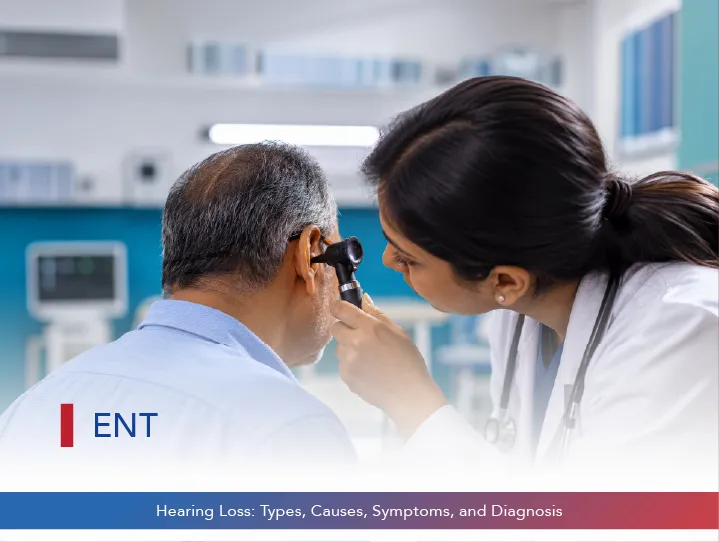
Diagnosing hearing loss begins with a detailed discussion of your symptoms, medical history, and any exposure to loud noise or previous ear problems. An ENT specialist performs a thorough examination of the ears to identify visible problems such as earwax buildup or infection.
To determine the type and severity of hearing loss, several specialised hearing tests may be recommended. These commonly include pure-tone audiometry, tympanometry, tuning fork tests, otoacoustic emission (OAE) testing, and auditory brainstem response (ABR) testing.
Imaging studies such as CT scans or MRI may also be advised when structural abnormalities or nerve-related conditions are suspected.
These investigations help identify the exact cause of hearing loss and allow doctors to develop an individualised treatment plan.
Treatment depends on the type, severity, and underlying cause of hearing loss. Some conditions, such as ear infections or earwax blockage, can often be treated successfully with medications or simple procedures. If hearing loss results from damage to the eardrum or middle ear bones, surgery may help restore hearing.
For permanent hearing loss, hearing aids remain one of the most effective treatment options, helping improve communication and daily functioning. Patients with profound hearing loss who do not benefit from hearing aids may be candidates for cochlear implants, which bypass damaged portions of the inner ear and directly stimulate the hearing nerve.
If hearing loss occurs suddenly, immediate medical attention is essential. Early diagnosis and treatment can significantly improve the chances of recovering hearing.
Although not every form of hearing loss can be prevented, adopting healthy habits can significantly reduce your risk.
Hearing loss is a common condition that can affect people of all ages, but it should never be ignored. Whether it develops gradually or occurs suddenly, recognising the early signs and seeking medical care can help preserve hearing and improve quality of life. Early diagnosis also allows doctors to identify the underlying cause and recommend the most appropriate treatment.
If you or a loved one is experiencing hearing loss symptoms or the symptoms of deafness, consult an experienced ENT Specialist in Bangalore. At a leading ENT Hospital in Bangalore, specialists use advanced diagnostic techniques and personalised treatment plans to help patients manage hearing loss and protect their long-term hearing health.
Hearing loss is the partial or complete inability to hear sounds in one or both ears. It may be temporary or permanent, depending on the underlying cause.
Common causes include ageing, prolonged noise exposure, ear infections, earwax buildup, head injuries, certain medications, and inherited conditions.
Common hearing loss symptoms include difficulty hearing conversations, asking others to repeat themselves, tinnitus, and needing to increase the volume on electronic devices.
Many cases can be prevented by protecting your ears from loud noise, treating ear infections promptly, and having regular hearing check-ups.
Categories: ENT









Hearing Loss: Types, Causes, Symptoms, and Diagnosis is available for appointments. Please fill the below form to book an appointment.
Unlock the door to exceptional healthcare, book an appointment with SPARSH Hospital and let your journey to wellness begin.
Copyright © 2026 SPARSH Hospital, A Unit of Shiva & Shiva Orthopaedic Hospital Pvt Ltd.






 Live Chat